

There are few furniture silhouettes as instantly recognisable as the bombe.
With its graceful curves, serpentine lines, and sculptural presence, bombe furniture has captivated homeowners and designers for centuries. Once associated with the grand salons and aristocratic residences of 18th-century France, the bombe silhouette has undergone a remarkable transformation in recent decades. Today, it is finding new relevance within contemporary Australian interiors, where designers are embracing softer forms, layered textures, and furniture that balances history with modern living.
In luxury Sydney homes, curved furniture is experiencing a quiet renaissance. As interiors move away from rigid minimalism and towards warmer, more collected environments, pieces such as the Featherington Commode, Hyacinthe Bombe Commode, Louis Curved Buffet 160cm, and Louis Curved Buffet 300cm by Thomas and Hurley are proving that traditional design can feel remarkably contemporary.
The appeal lies not only in their craftsmanship but also in their ability to introduce warmth, movement, and personality into modern spaces.
The Origins of the Bombe: A Story of French Craftsmanship
The word bombe derives from the French term meaning "swollen" or "curved outward," referring to the distinctive convex shape that defines these pieces.
The bombe chest first emerged during the reign of Louis XV in 18th-century France, a period often regarded as one of the great eras of decorative arts. Moving away from the rigid symmetry of earlier Baroque furniture, French cabinetmakers embraced flowing lines, organic forms, and natural inspiration.
Furniture became increasingly sculptural.
Master craftsmen developed extraordinary techniques to shape timber into elegant curves, often veneering pieces with exotic woods and embellishing them with gilt bronze mounts, marquetry, and intricate hand-carved details. These furnishings were not simply practical objects; they were expressions of status, artistry, and refinement.
The bombe commode quickly became a centrepiece within French interiors, admired for its ability to soften a room through movement and proportion.
Centuries later, those same principles continue to resonate.
Why Curved Furniture Feels So Relevant Today
Interior design trends often move in cycles.
After years dominated by sharp lines, industrial materials, and ultra-minimalist spaces, homeowners are increasingly seeking interiors that feel warmer, softer, and more inviting. Curved furniture answers this perfectly.
Unlike rectangular cabinetry, bombe and curved buffets introduce a sense of flow that naturally draws the eye through a room. Their organic silhouettes soften architecture, break up hard lines, and create visual balance.
This shift is particularly evident within luxury Australian interiors, where contemporary homes often feature expansive open-plan spaces, large windows, and architectural detailing.
Curved furniture helps humanise these environments.
Designers are increasingly incorporating:
-
Rounded sofas
-
Curved occasional chairs
-
Circular mirrors
-
Organic lighting
-
Bombe chests and buffets
-
Arched architectural details
Together, these elements create spaces that feel layered, comfortable, and emotionally engaging.
The Contemporary French Provincial Revival
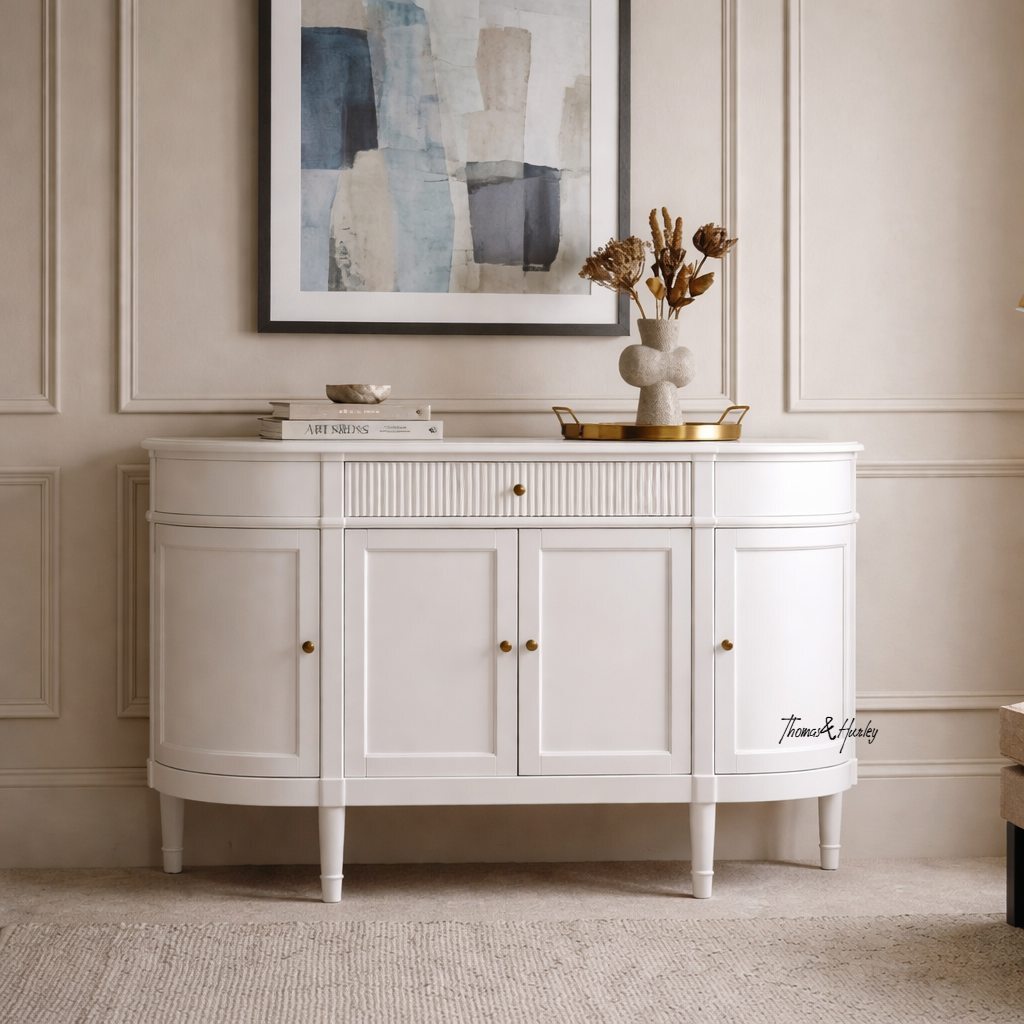
French Provincial furniture has long held a place within Australian homes, particularly through the popularity of Hamptons and traditional interiors.
However, today’s interpretation is significantly different.
Rather than recreating historical rooms exactly, contemporary designers are selectively borrowing key elements from French Provincial design — elegant proportions, curved forms, craftsmanship, and timeless detailing — while pairing them with cleaner palettes and more restrained styling.
The result feels fresh rather than traditional.
This evolution has helped French-inspired furniture move beyond purely classic interiors and into a broad range of contemporary luxury spaces.
Today, curved buffets and bombe commodes work beautifully within:
-
Modern Hamptons homes
-
Luxury coastal interiors
-
Contemporary classic residences
-
Transitional interiors
-
Modern farmhouse homes
-
European-inspired Australian interiors
-
Warm minimalist spaces
The versatility of these pieces is one of their greatest strengths.
The Featherington Commode: Character Through Patina
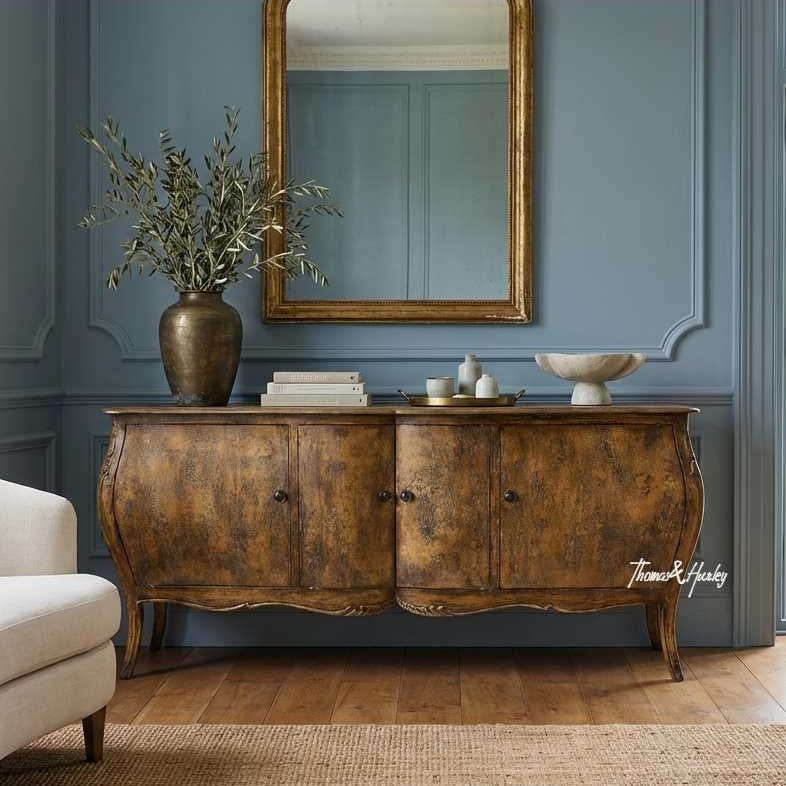
One of the enduring appeals of French-inspired furniture is its ability to tell a story.
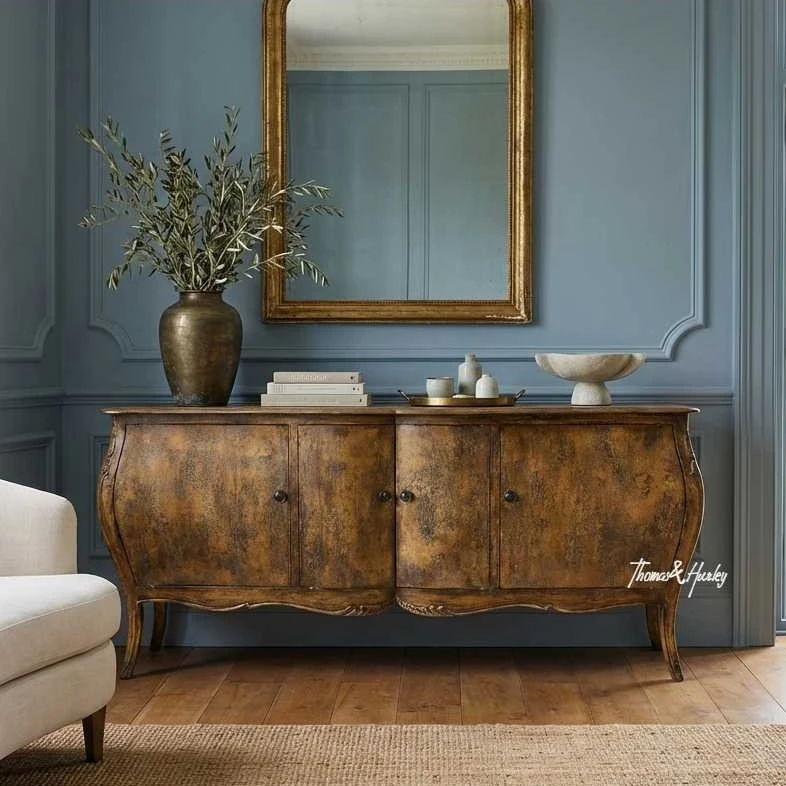
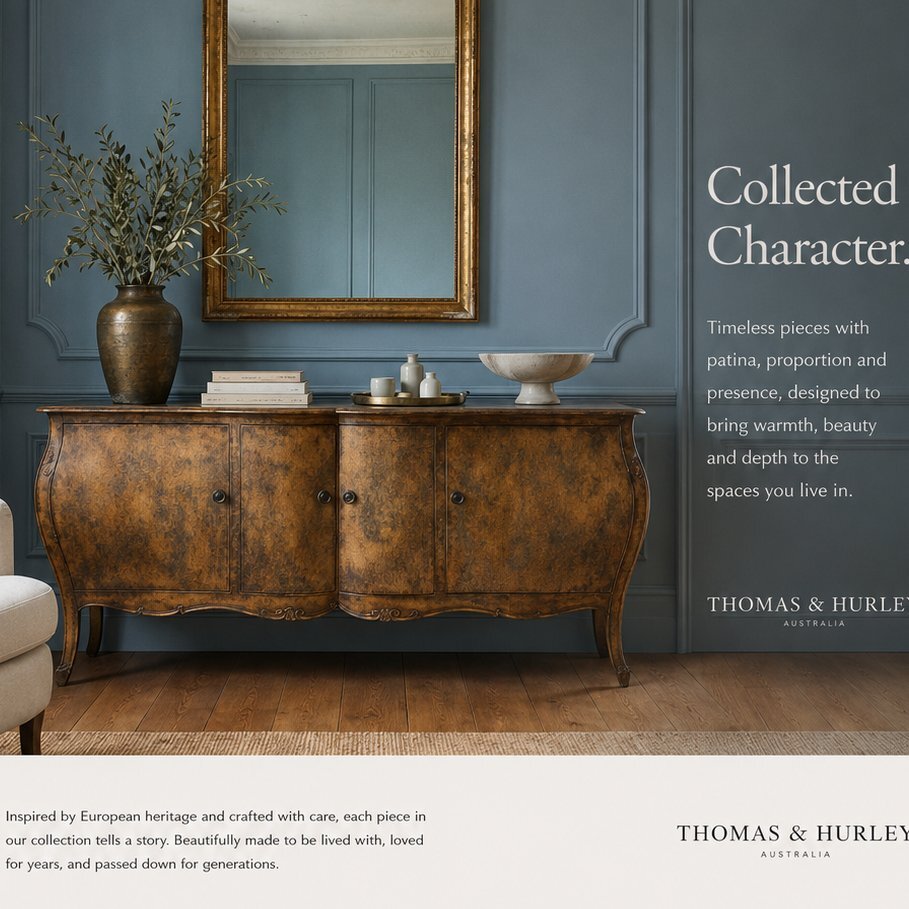
The Featherington Commode captures this beautifully through its rich timber finish, sculptural curves, and collected appearance. There is an almost heirloom quality to the piece, as though it has evolved naturally over generations.
Within contemporary interiors, pieces like the Featherington introduce character that newer, highly polished furniture often lacks.
Placed beneath a statement mirror or layered with ceramics and collected objects, the commode becomes more than storage. It becomes a focal point that anchors the room emotionally as well as visually.
For luxury Sydney homeowners seeking interiors that feel authentic rather than overly styled, this sense of character is increasingly valuable.
The Hyacinthe Bombe Commode: A Bold Interpretation of French Design
The Hyacinthe Bombe Commode demonstrates how traditional forms can feel unexpectedly contemporary.
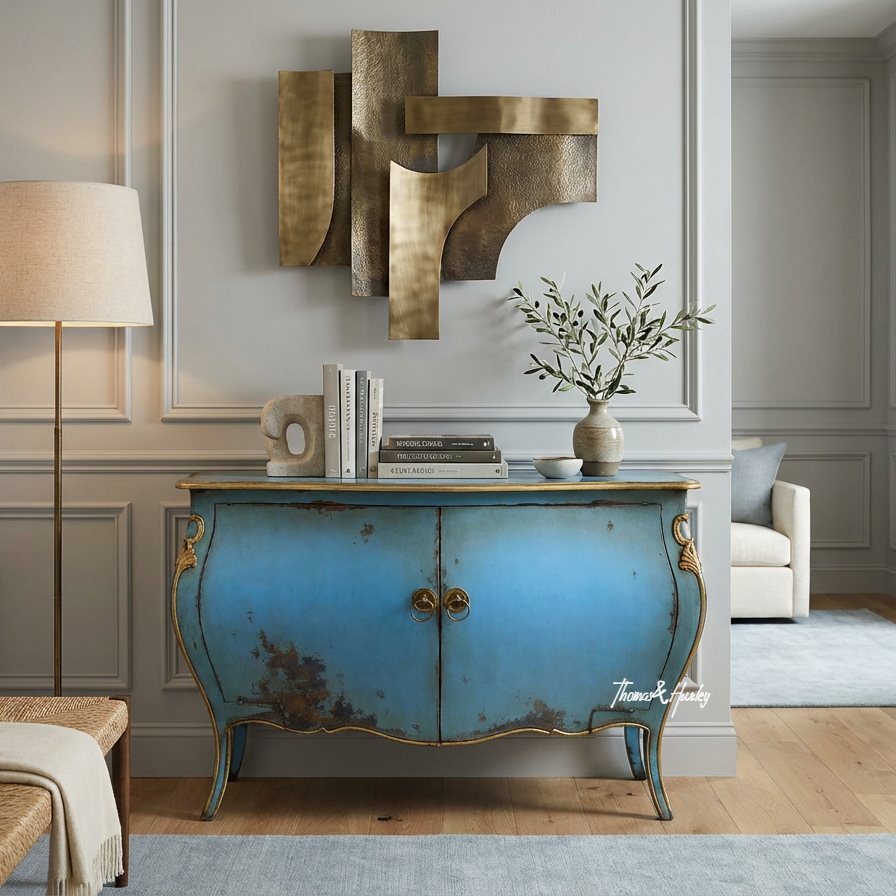
Its vibrant finish immediately commands attention, while the familiar bombe silhouette maintains a connection to centuries of French furniture design. The result is a piece that feels both playful and sophisticated.
This reflects a broader movement within high-end interiors where statement furniture is being used to introduce personality without overwhelming a room.
Rather than relying solely on colour through paint or soft furnishings, designers are increasingly allowing individual furniture pieces to become artistic focal points.
Within a neutral interior, a piece such as the Hyacinthe creates visual energy while retaining elegance through its timeless form.
The Rise of Curved Buffets in Contemporary Interiors
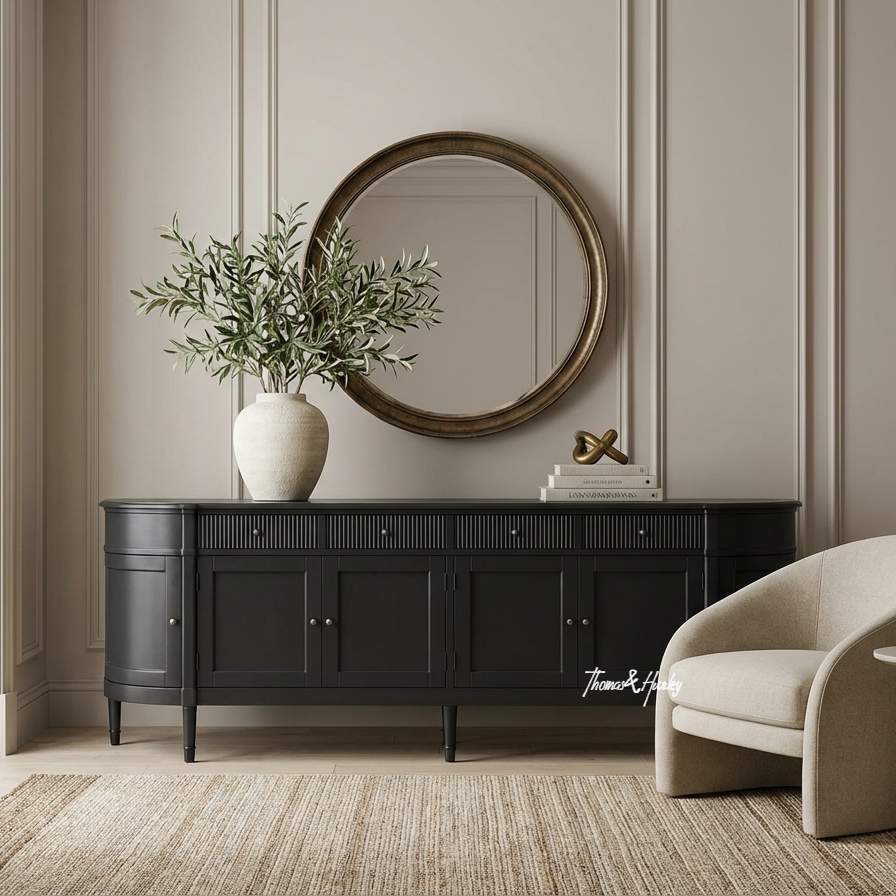
While bombe chests originated centuries ago, their influence can be clearly seen in many of today's curved sideboards and buffets.
The Louis Curved Buffet collection represents this evolution beautifully.
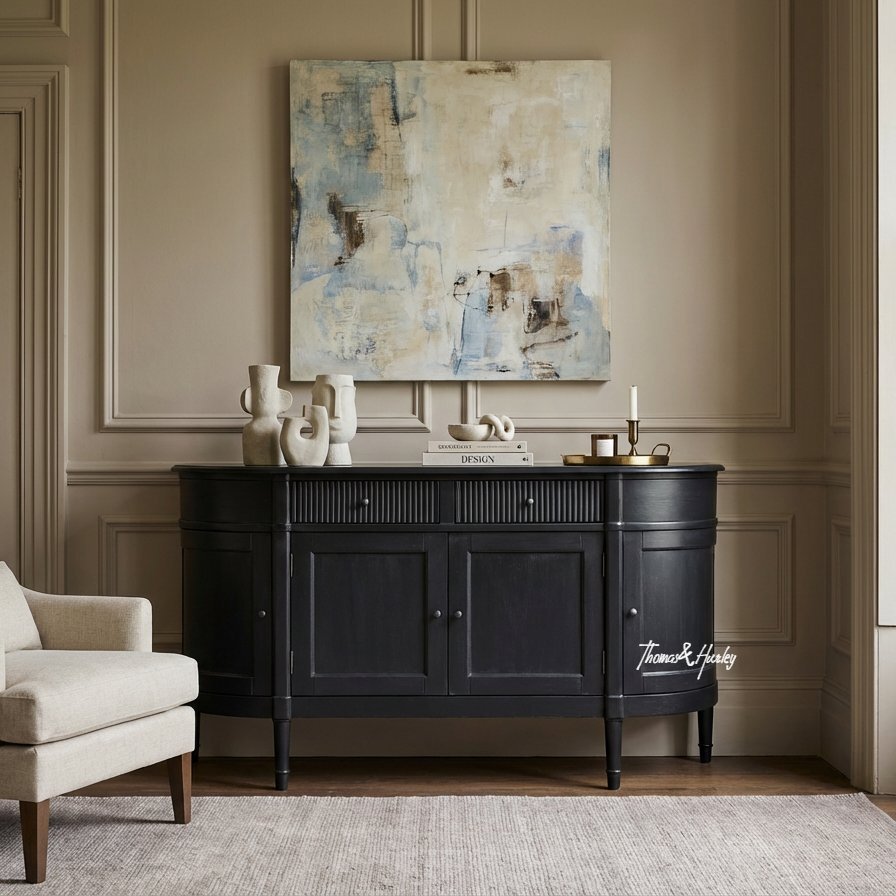
Rather than heavily ornamented detailing, the focus shifts towards proportion, craftsmanship, and subtle curvature. The softened corners and gently rounded profile create a sense of refinement while remaining highly versatile across different design styles.
This approach aligns perfectly with the current direction of luxury Australian interiors.
Recent projects featured in leading publications such as Vogue Living Australia and Belle Magazine Australia frequently showcase interiors where traditional forms are reinterpreted through a contemporary lens.
The Louis Curved Buffet embodies this balance.
It feels classic enough to remain timeless yet contemporary enough to complement modern architecture.
Why Curved Furniture Works So Well in Australian Homes
Australian homes often feature expansive open-plan layouts, high ceilings, and strong architectural lines.
While these characteristics create beautiful spaces, they can sometimes feel visually rigid without softer design elements.
Curved furniture provides an elegant solution.
The benefits include:
Softening Architectural Geometry
Curves naturally counterbalance straight walls, sharp corners, and large-scale joinery.
Improving Visual Flow
Rounded silhouettes encourage movement throughout a space, creating a more relaxed atmosphere.
Creating a Sense of Luxury
Historically, curved furniture required exceptional craftsmanship, and that association with quality remains today.
Enhancing Layered Interiors
Curved buffets pair beautifully with natural materials such as linen, oak, wool, stone, and brass.
Adding Timeless Appeal
Unlike trend-driven furniture forms, curves have remained relevant across centuries of design history.
How to Style Bombe and Curved Furniture in a Contemporary Interior
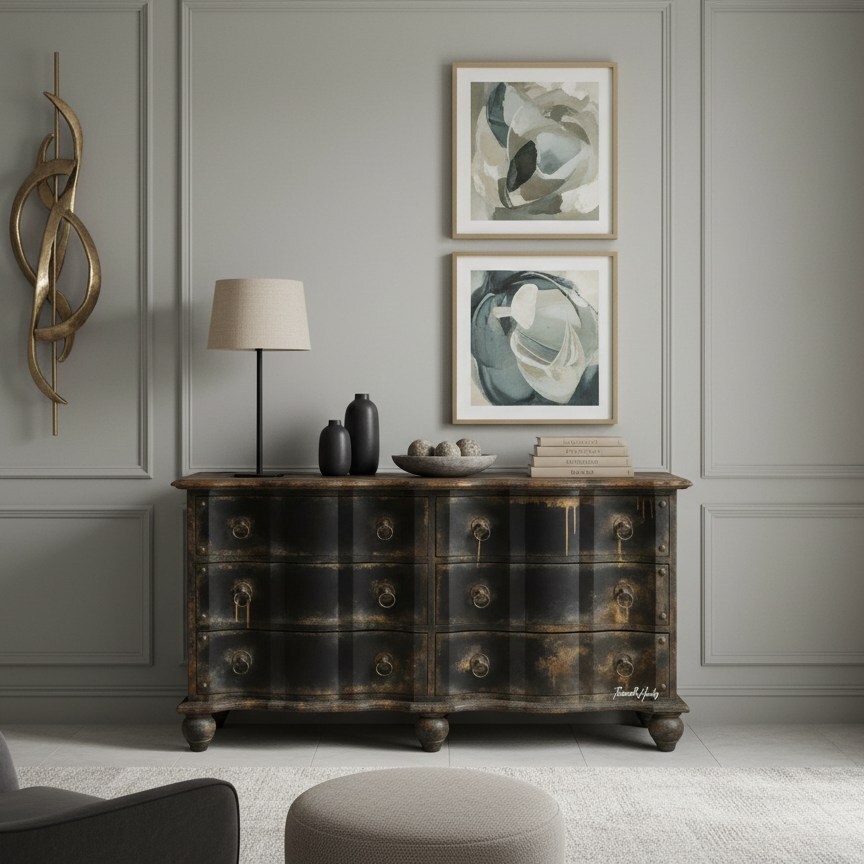
One of the reasons French-inspired furniture continues to resonate is its adaptability.
To create a contemporary luxury aesthetic, focus on restraint rather than excess.
Pair Traditional Forms with Modern Art
Abstract artwork creates an appealing contrast against classic furniture silhouettes.
Use Large-Scale Mirrors
Round and arched mirrors enhance the softness of curved furniture while reflecting natural light throughout the room.
Keep Colour Palettes Neutral
Warm whites, soft taupes, muted blues, and natural timber tones allow furniture forms to become the focal point.
Layer Organic Textures
Linen, wool, rattan, ceramics, and aged brass all complement French-inspired furniture beautifully.
Avoid Over-Styling
Allow the furniture itself to be the hero. A simple ceramic vessel, a stack of books, or a sculptural lamp is often enough.
Curated Character: The Future of Luxury Furniture
Perhaps the most significant reason bombe and French Provincial-inspired furniture remain relevant is that they offer something increasingly rare within modern interiors: character.
In a world filled with uniformity and mass production, pieces with distinctive silhouettes, craftsmanship, and historical references feel deeply personal.
The Featherington Commode, Hyacinthe Bombe Commode, Louis Curved Buffet 160cm, and Louis Curved Buffet 300cm demonstrate how heritage-inspired furniture can evolve gracefully alongside contemporary living.
Their appeal lies not in nostalgia, but in their ability to create interiors that feel layered, collected, and enduring.
Bringing French-Inspired Luxury Home with Thomas and Hurley
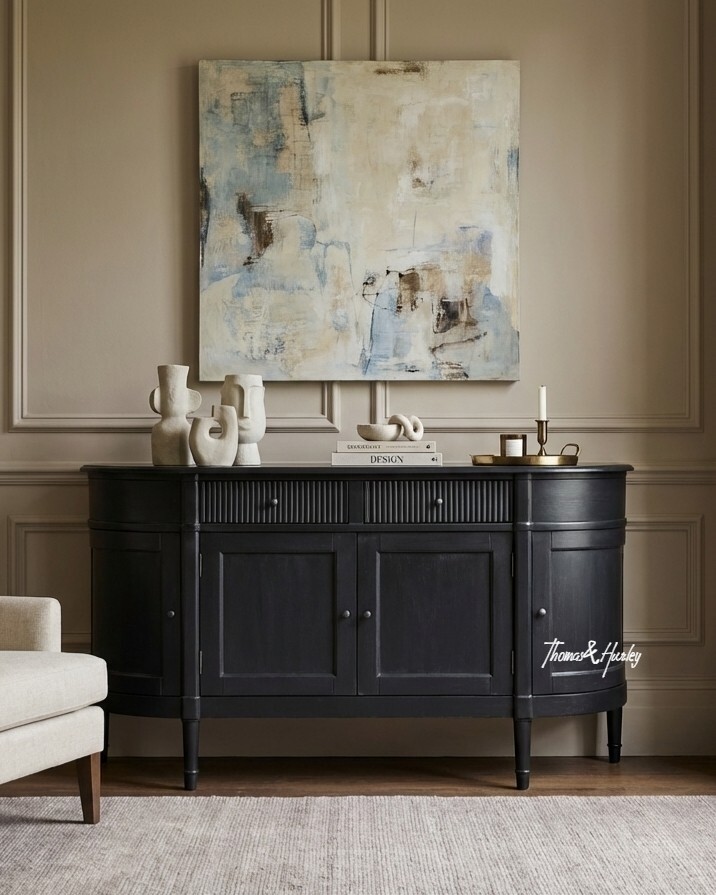
At Thomas and Hurley, timeless design is approached through the lens of modern Australian living. The collection of bombe commodes and curved buffets celebrates centuries of craftsmanship while embracing the softer, more relaxed luxury sought by today’s homeowners and interior designers.
Whether placed within a contemporary Sydney residence, a luxury coastal retreat, a modern Hamptons home, or a European-inspired interior, these pieces introduce warmth, movement, and architectural beauty that transcends trends.
Because while styles evolve, beautifully crafted furniture with character never truly goes out of fashion.