

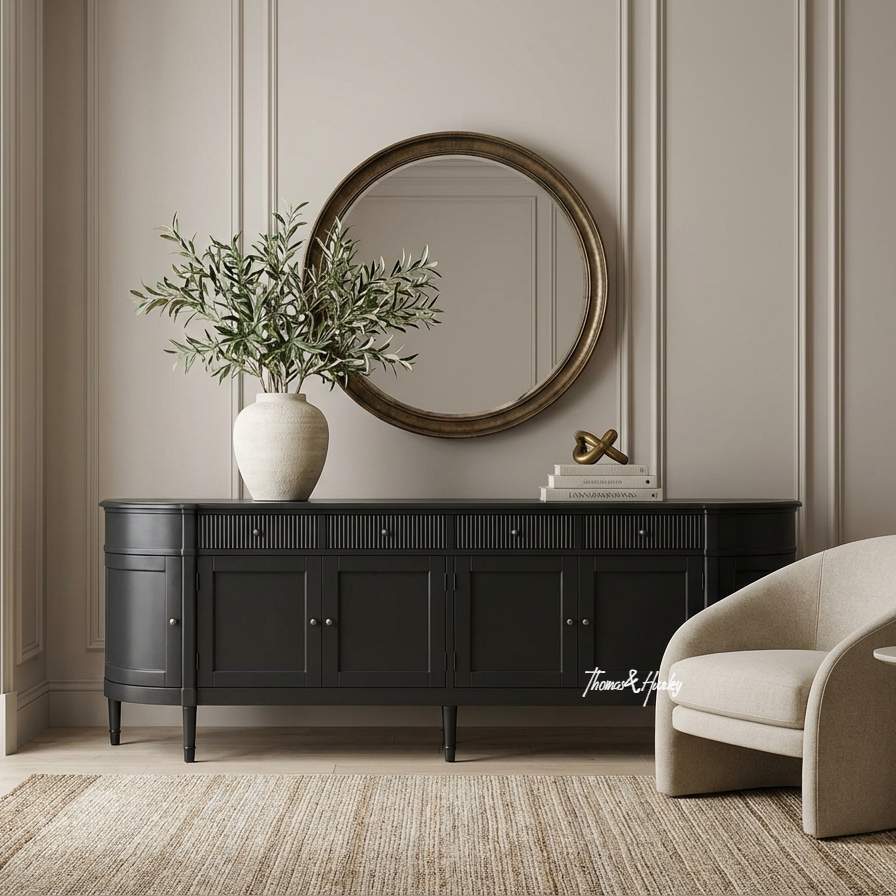
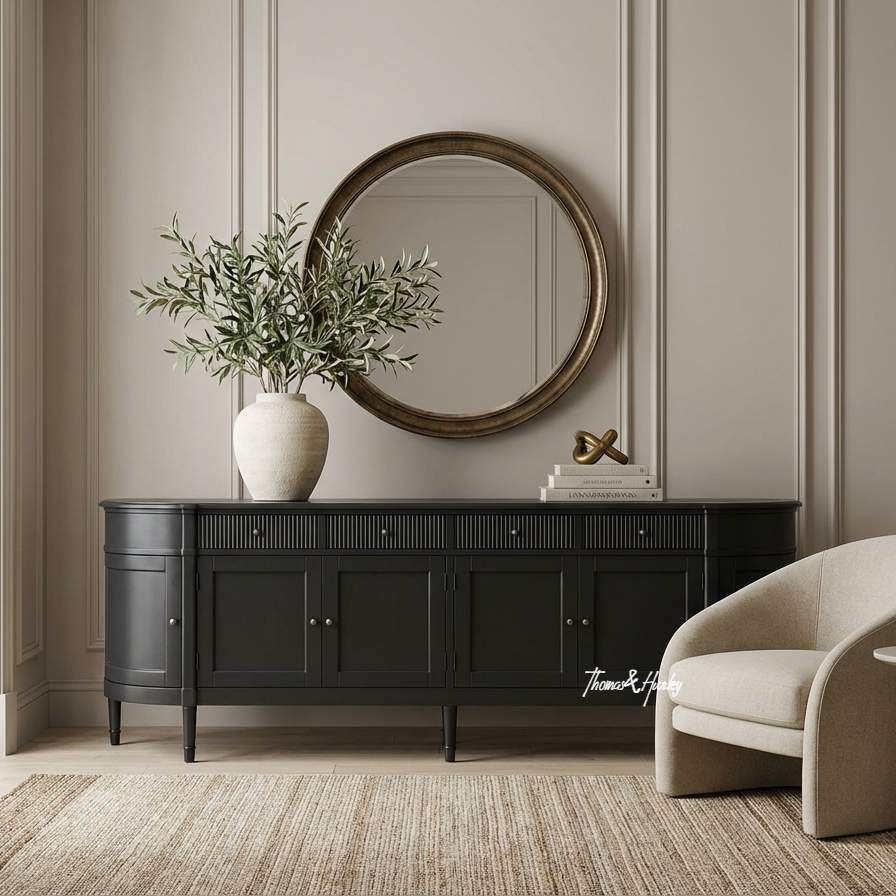
There's a reason luxury homes and designer interiors often feel calmer, softer, and more inviting, and surprisingly, it has less to do with colour palettes and more to do with shape.
Interior designers have long used curved furniture to create spaces that feel elevated and more considered. Rounded edges naturally soften a room visually, improve flow, and make interiors feel more relaxed without needing a full renovation.
In many contemporary Australian homes, especially open plan living spaces, harsh lines can make a room feel overly structured. Bringing in a piece or two of curved furniture helps balance the architecture and creates a more welcoming atmosphere, the kind of shift that doesn't need a tradie, just the right piece in the right spot.
1. The Return of Curved Sideboards
One of the biggest shifts in contemporary furniture design has been the move away from sharp, boxy cabinetry towards softer silhouettes and organic forms.
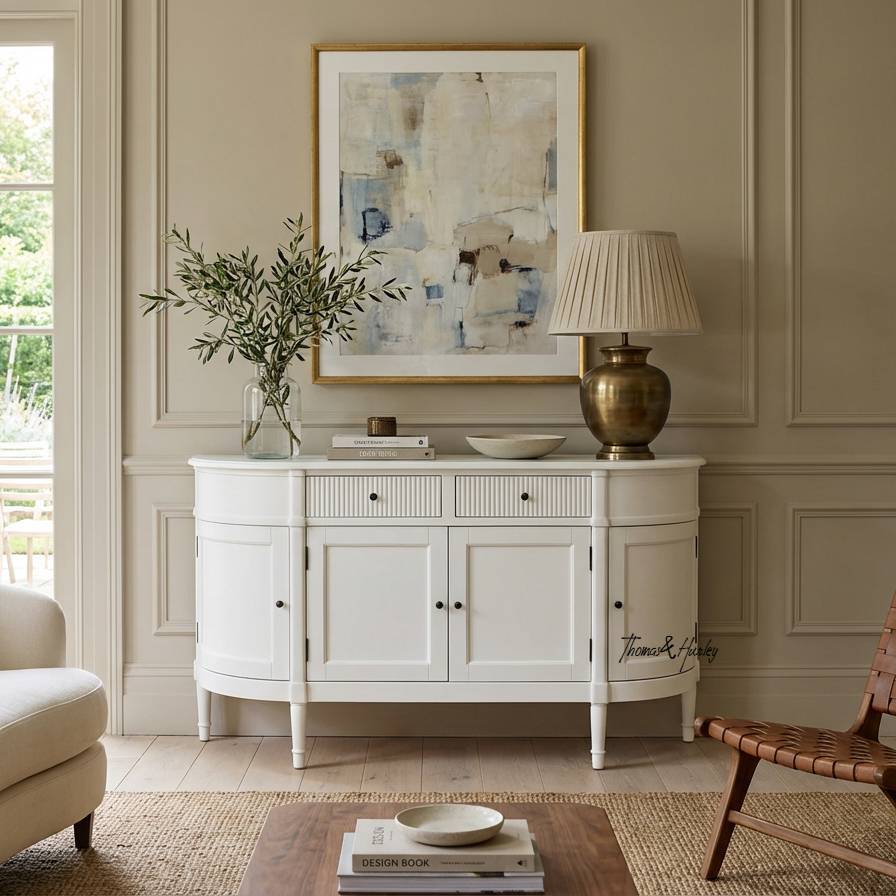
Curved sideboards are becoming increasingly popular because they add architectural softness while still offering practical storage. Unlike traditional cabinetry, rounded profiles create a more relaxed visual flow throughout a room and help large furniture pieces feel lighter within the space.
The Louis Sideboard is a strong example of this trend. Available in multiple sizes, its curved detailing and soft form help create a more refined, elevated look without overpowering the room.
Designers often use curved sideboards in dining rooms, entryways, and living spaces because they break up the straight lines created by walls, flooring, and kitchen joinery.
This subtle contrast is often what gives a room its effortless feel, the sort of look that doesn't announce itself but changes everything.
2. Why Rounded Furniture Changes the Feel of a Room
Curved furniture naturally guides movement through a space. Without hard corners interrupting sightlines, rooms tend to feel calmer and more open.
This is particularly effective in Australian homes where open plan layouts dominate and furniture needs to feel cohesive across multiple living zones.
Rounded furniture can also make a space appear more expensive, softer forms create visual layering and depth, something you'll notice in boutique hotels and professionally designed homes.
Even smaller pieces make a noticeable difference. Rounded mirrors reflect light more softly. Curved occasional chairs introduce balance against architectural spaces. Sculptural coffee tables help a living room feel less rigid and more relaxed.
3. How Designers Use Curved Furniture Successfully
The key is balance rather than excess.
Too many curved pieces can feel overly styled, while introducing one or two softer furniture shapes is often enough to transform a room.
A few effective ways designers bring curved furniture into a space:
- Using a curved sideboard against straight architectural walls
- Pairing rounded dining chairs with a structured dining table
- Introducing boucle or upholstered occasional chairs
- Layering natural textures like oak, linen, stone, and brushed finishes
- Keeping colour palettes warm and neutral
This approach works particularly well within warm minimalist interiors, contemporary coastal homes, and modern classic spaces, styles that already suit the way most Australians live day to day.
4. Why Oak and Curved Forms Work So Well Together
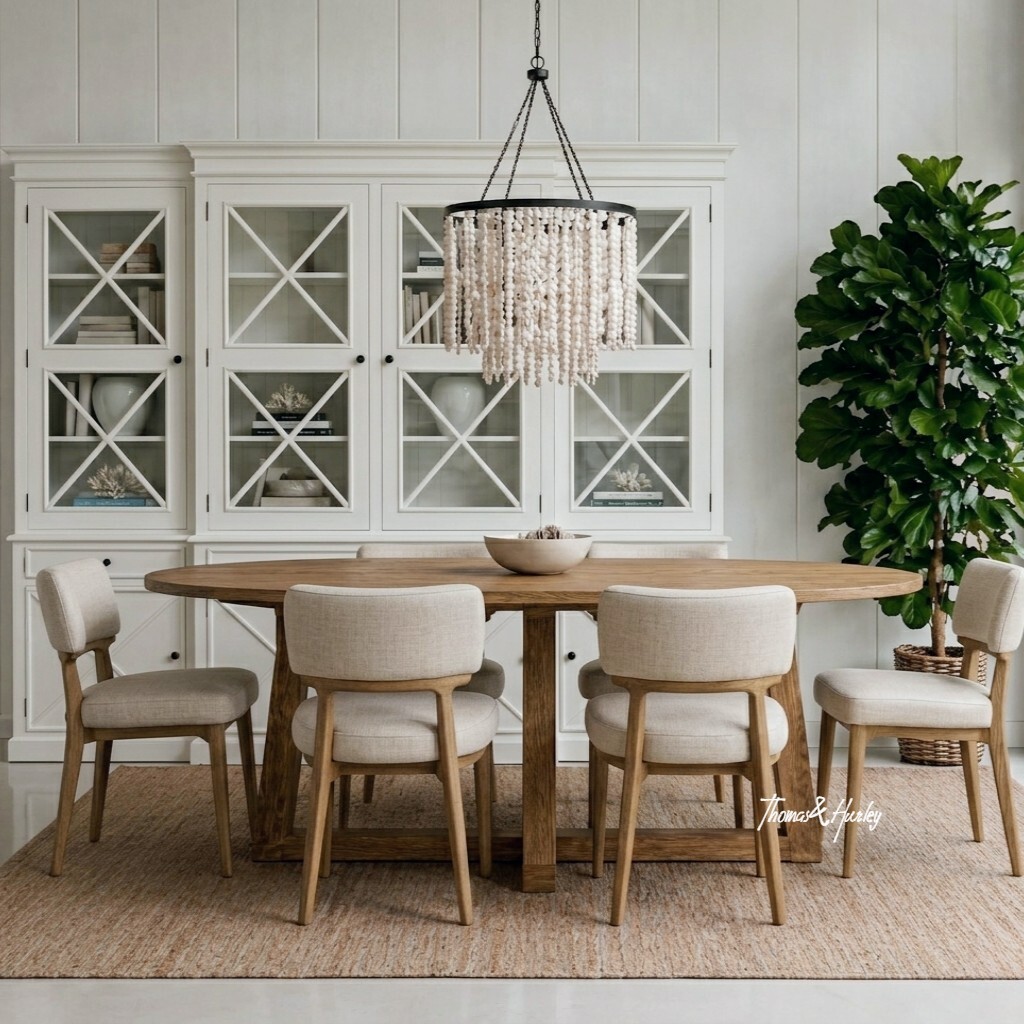
Natural oak already brings warmth and texture into an interior. Combine it with curved detailing and the result feels softer, more timeless, and less formal.
This is one reason rounded oak furniture keeps showing up throughout considered Australian interiors.
Pieces like the Ovalis Oak Dining Table complement curved cabinetry beautifully because they carry the same visual language through the space while keeping the overall look calm and cohesive.
Pairing this with upholstered seating such as the Royston Dining Chairs adds another layer of softness and comfort to the room.
Rather than chasing trends or over-styling, curved oak furniture creates impact through proportion, material, and simplicity, the sort of design decision that still looks right in ten years.
5. Creating a Softer, More Timeless Home
One reason this design approach has stayed relevant is because it focuses on how a home feels rather than simply how it looks.
Considered interiors today are moving away from overly formal styling and towards spaces that feel welcoming, layered, and genuinely liveable.
Often, the difference comes down to a handful of subtle details, softened edges, tactile materials, warm timber tones, and furniture designed with balance in mind.
According to recent reporting by Elle Decor, sculptural, curved silhouettes are one of the defining furniture trends designers are seeing across studios and showrooms heading into 2026, with clients increasingly gravitating towards softened, organic forms over sharp lines.
And sometimes, introducing a single curved furniture piece is enough to change the entire atmosphere of a room.
Frequently Asked Questions About Curved Furniture
Q: Why does curved furniture make a room feel more expensive? |
| A: Curved furniture softens sightlines and creates visual layering and depth, an effect commonly seen in boutique hotels and professionally designed homes. Rather than relying on colour or decoration, the shape itself makes a space feel more considered and elevated. |
Q: How much curved furniture should I introduce into a room? |
| A: Balance matters more than quantity. One or two curved pieces, a sideboard, a set of dining chairs, an occasional chair, is usually enough to create contrast against straight architectural lines without the room feeling overly styled. |
Q: What rooms suit curved furniture best? |
| A: Dining rooms, entryways, and living spaces all benefit, particularly in open plan Australian homes where curved pieces help break up the straight lines created by walls, flooring, and kitchen joinery, and keep furniture feeling cohesive across zones. |
Q: Does curved furniture work with oak and other natural materials? |
| A: Yes, oak and curved forms pair particularly well together. The warmth of natural oak combined with rounded detailing tends to feel softer, more timeless, and less formal than sharp-edged pieces in the same material. |
Q: What are some easy ways to start incorporating curved furniture? |
| A: Small pieces are an easy entry point, a rounded mirror, a curved occasional chair, or a sculptural coffee table. From there, a curved sideboard against a straight wall or rounded dining chairs paired with a structured table are effective next steps. |