

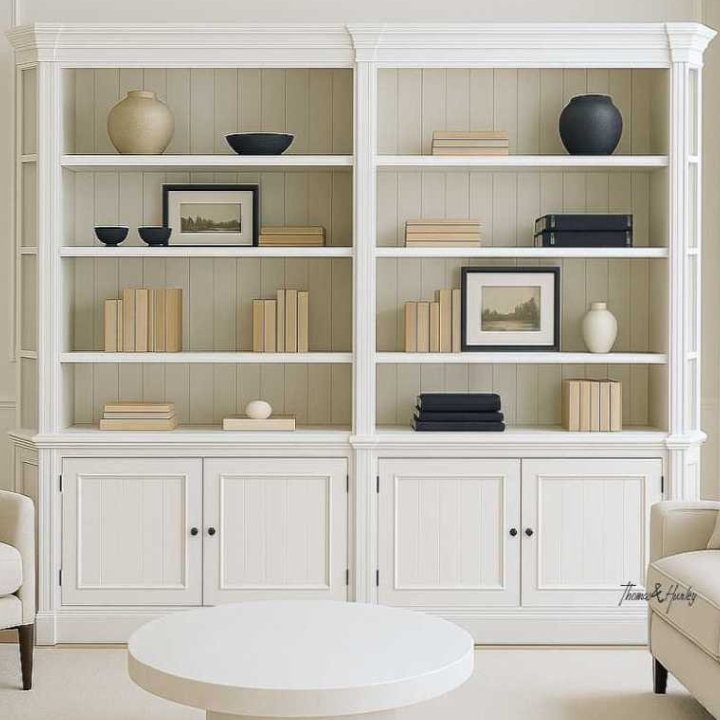
The most beautiful interiors are rarely defined by what is visible alone. They are equally shaped by what is hidden.
Whether you're designing a contemporary Sydney residence, a relaxed coastal retreat, or a timeless Hamptons-inspired home, storage plays a genuine role in creating interiors that feel calm, considered, and effortlessly put together. Yet one question keeps coming up among homeowners and interior designers alike:
Should you choose a display cabinet or a sideboard?
The answer depends on more than just storage requirements.
Display wall units and cabinets let you curate and showcase personal collections, while sideboards and buffets excel at concealing everyday items behind beautifully crafted doors. Both approaches can transform a room, but each creates a distinctly different atmosphere.
1. The Rise of Thoughtful Storage in Australian Homes
Over the past decade, Australian interiors have evolved a fair bit.
Minimalist spaces once focused heavily on visual simplicity, often at the expense of warmth and personality. These days, designers are embracing a more layered approach that combines functionality with character.
This shift is particularly evident in Sydney's furniture market, where homeowners are after pieces that provide practical storage while contributing architecturally to the room itself.
Storage furniture is no longer just functional.
It has become part of the overall design story.
The question is no longer "Where can I store this?" Instead, it has become "What story do I want this room to tell?"
2. The Case for Display Cabinets and Wall Units
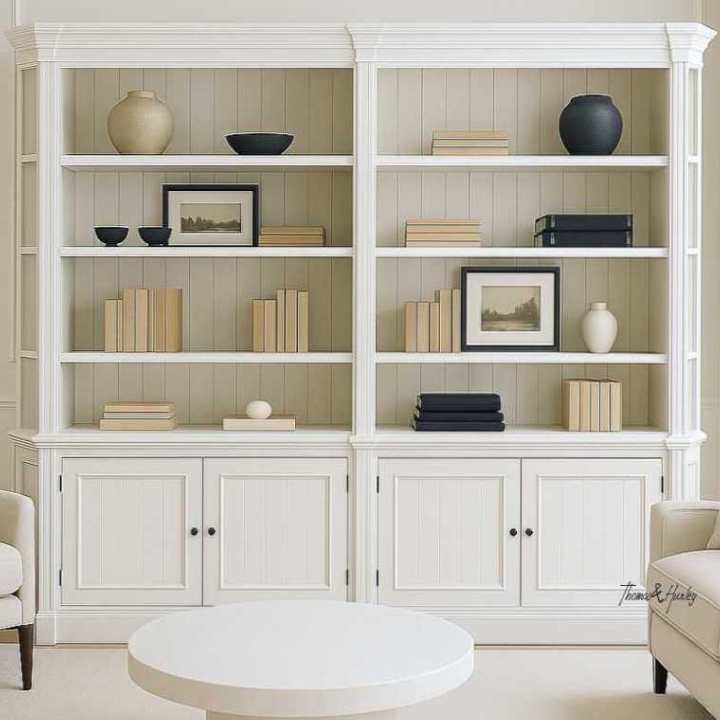
Display cabinetry offers something unique: the chance to curate.
Unlike enclosed storage, display cabinets invite homeowners to showcase objects that reflect personality, travel, interests, and lifestyle.
Books, ceramics, glassware, collected objects, family heirlooms, and sculptural pieces all become part of the room's visual composition.
The result feels layered and lived-in.
Why Display Cabinets Work So Well in Contemporary Interiors
Display cabinetry creates visual depth.
When styled thoughtfully, shelves introduce rhythm and texture throughout a room while helping larger spaces feel more personal and connected.
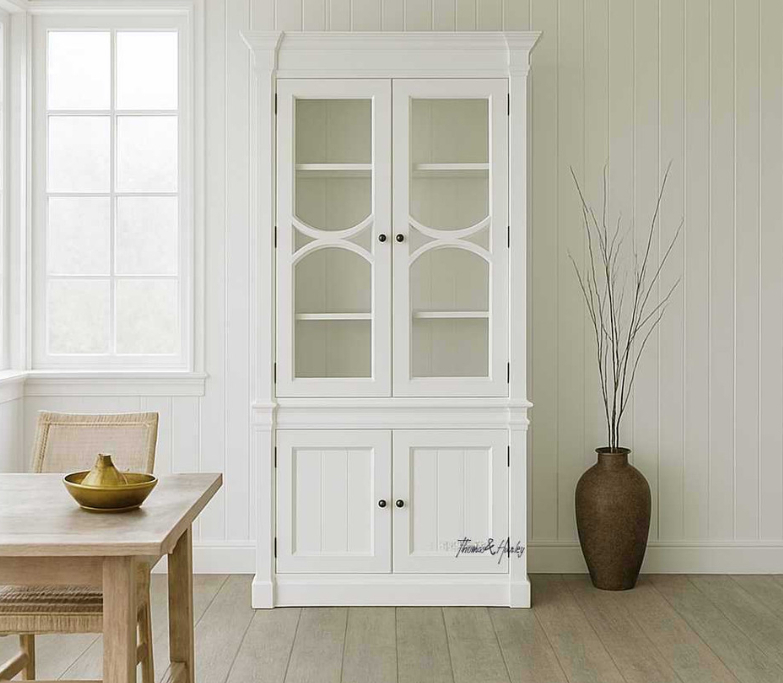
The Stonefield Double Display Wall Unit with Angled Sides demonstrates this nicely.
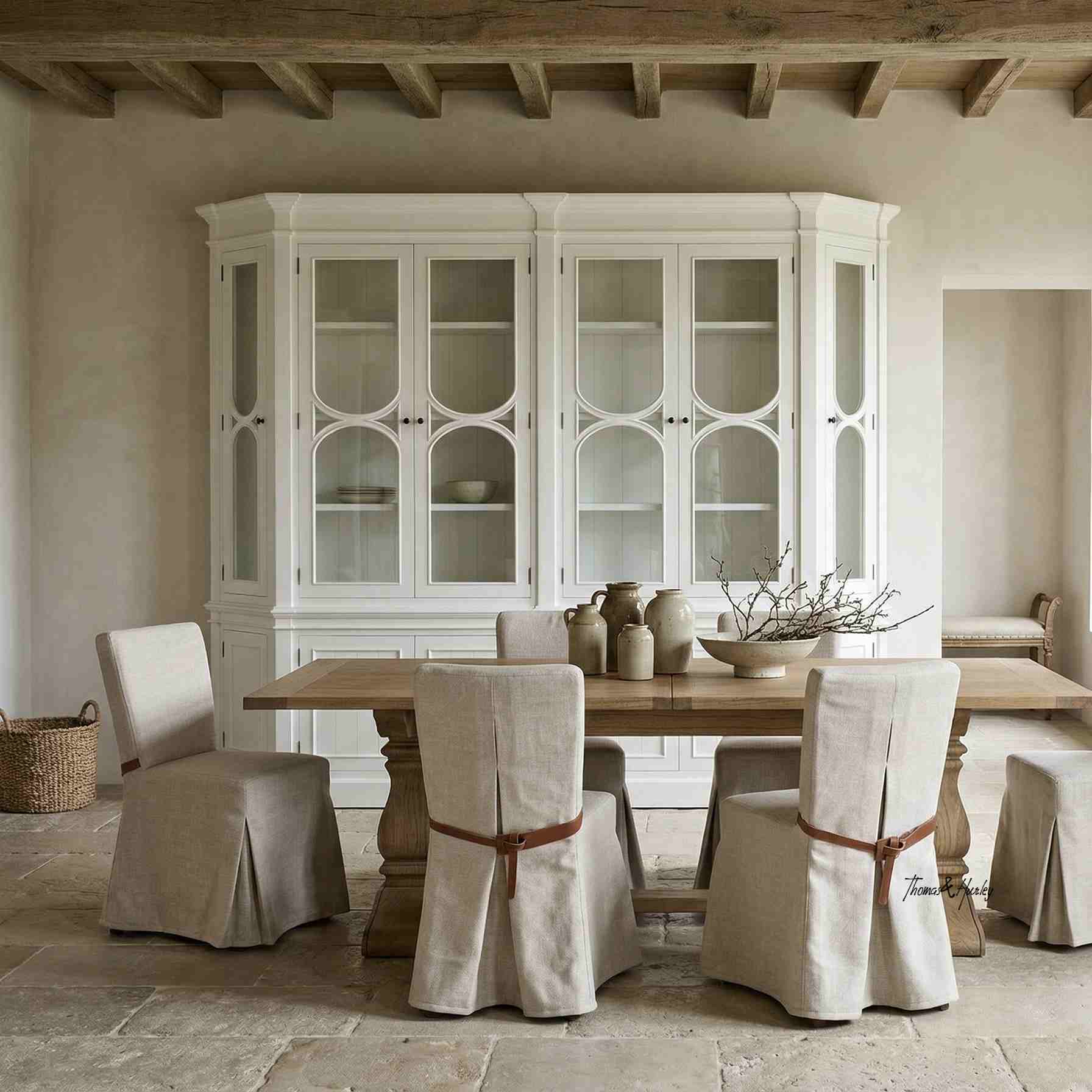
Its substantial scale creates architectural presence while the glazed doors keep it visually light. Rather than feeling heavy, the cabinetry feels elegant and airy, letting displayed objects become part of the overall design.
Display wall units are particularly effective in:
- Hamptons-style homes
- Coastal interiors
- Contemporary classic residences
- Modern farmhouse interiors
- Transitional architectural styles
These aesthetics naturally embrace layered styling and collected character.
3. Display Wall Units as Architectural Features
One of the greatest strengths of larger display cabinetry is its ability to transform an entire wall.
The Stonefield Display TV Media Entertainment Wall Unit is a good example.
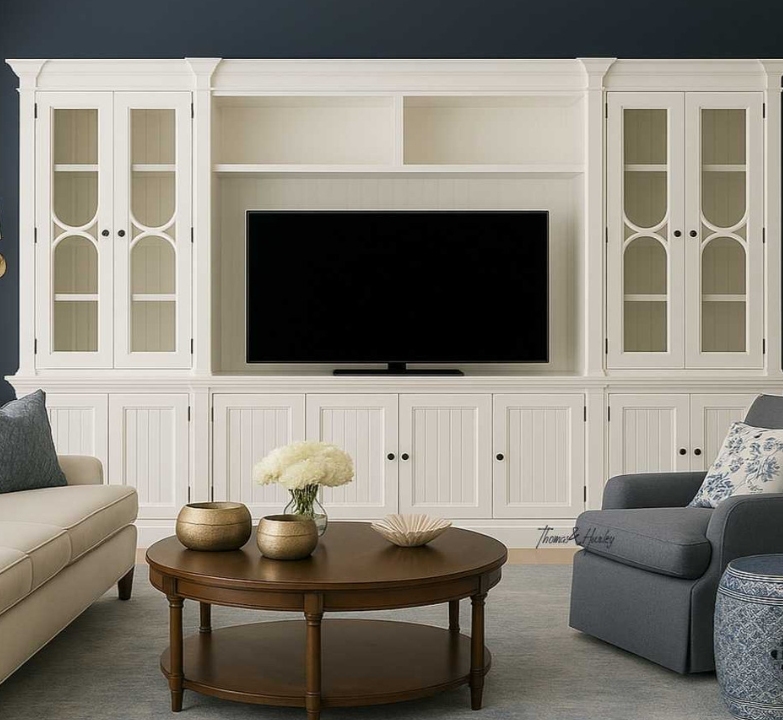
Rather than simply housing a television, it creates a complete architectural framework for the living room. The cabinetry establishes symmetry, balance, and permanence while integrating technology into a more refined composition.
This is especially useful in open-plan homes, where large walls can sometimes feel visually empty.
A substantial wall unit helps:
- Anchor large living spaces
- Create focal points
- Improve visual balance
- Introduce symmetry
- Provide concealed and displayed storage at the same time
For homeowners after living room furniture in Sydney, wall units often give the feel of bespoke joinery without the complexity of a full custom build.
4. The Art of Styling Display Cabinets
Display cabinetry succeeds or fails largely based on styling.
The goal isn't to fill every shelf.
Instead, think in terms of curation.
Layer Objects at Different Heights
Books, ceramics, vessels, and artwork should create visual variation throughout the cabinet.
Embrace Negative Space
Empty space lets displayed pieces breathe and stops the cabinetry from feeling cluttered.
Work Within a Colour Palette
Neutral ceramics, timber accents, stone objects, and tonal books create a calm, cohesive look.
Mix Functional and Decorative Elements
Glassware, serving pieces, and everyday objects help display cabinets feel authentic rather than staged.
This approach works particularly well within coastal and Hamptons interiors, where relaxed elegance is central to the aesthetic.
5. When Sideboards Make More Sense
While display cabinets celebrate visibility, sideboards embrace concealment.
For many homeowners, hidden storage is essential to keeping a calm, uncluttered space.
Sideboards let daily necessities disappear completely while still contributing beautifully to the room.
This is where pieces such as the Louis Curved Buffet 200cm in White and Louis Curved Buffet 300cm in Black excel.
Rather than drawing attention to their contents, they focus attention on form, craftsmanship, and silhouette.
6. The Appeal of Hidden Storage
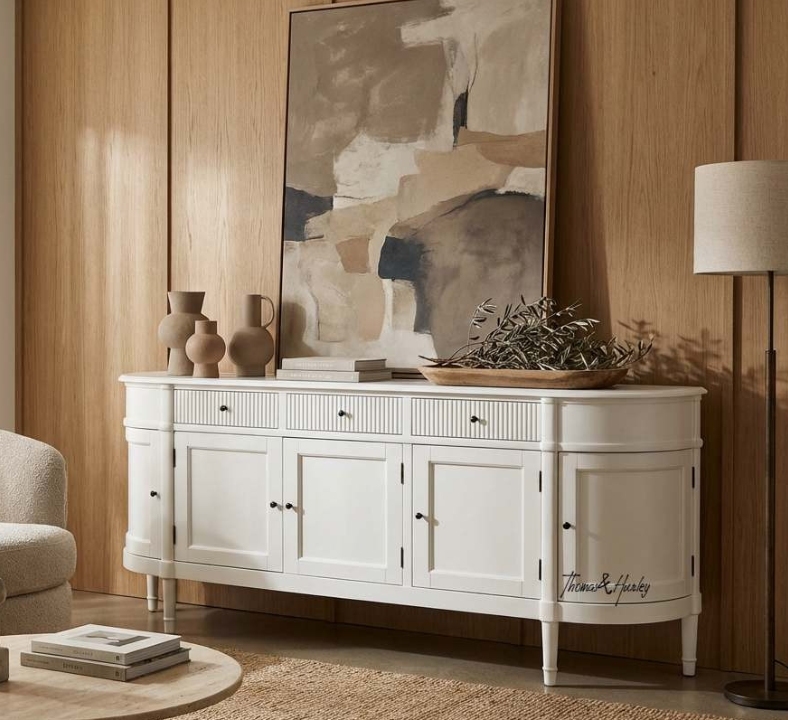
Warm minimalism has become one of the defining influences in contemporary Australian design.
Unlike stark minimalism, warm minimalism embraces texture, natural materials, and subtle detailing while keeping things visually simple.
Sideboards align perfectly with this idea.
Their enclosed storage lets homeowners:
- Reduce visual clutter
- Store entertaining essentials
- Conceal technology and accessories
- Maintain cleaner sightlines
- Create calmer spaces
The result is an interior that feels serene and genuinely considered.
For a lot of modern Sydney homes, particularly apartments and contemporary architectural residences, this simplicity is incredibly appealing.
7. Curved Buffets and the Softer Side of Storage
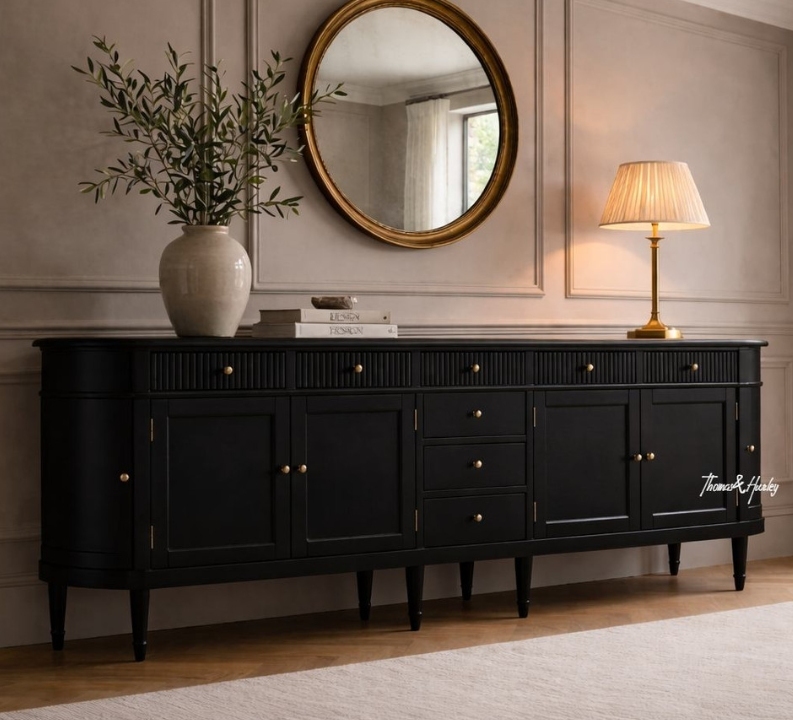
One reason curved buffets have become increasingly popular is their ability to soften a room.
The Louis Curved Buffet collection introduces elegant curvature that feels both contemporary and timeless.
Unlike heavily ornate furniture, these pieces rely on proportion and silhouette rather than excessive decoration.
Curved furniture naturally complements:
- Organic modern interiors
- Coastal homes
- Contemporary classic spaces
- Warm minimalist environments
- European-inspired Australian interiors
The white Louis Curved Buffet feels light, relaxed, and coastal, while the black Louis Curved Buffet brings a stronger architectural presence.
Both achieve the same goal, practical storage wrapped in timeless design.
8. Choosing Based on Room Size
One of the simplest ways to work out whether a display cabinet or sideboard suits your space is to consider room scale.
Larger Living Rooms
Large spaces often benefit from substantial wall units.
The Stonefield Display TV Media Entertainment Wall Unit creates enough visual weight to balance expansive walls while offering significant storage capacity.
Medium-Sized Dining Rooms
The Stonefield Double Display Wall Unit works beautifully in dining spaces where entertaining pieces, glassware, and ceramics deserve visibility.
Smaller Spaces
The Stonefield Single Display Wall Unit offers display opportunities without overwhelming the room.
Compact Living Areas
Sideboards often perform better in smaller spaces because they keep the room feeling open while still providing valuable storage.
9. Hamptons vs Warm Minimalism: Which Style Works Best?
Storage choices often align closely with broader design aesthetics.
Hamptons Interiors
Hamptons homes tend to embrace display cabinetry.
Collections of ceramics, books, woven textures, and glassware contribute to the relaxed sophistication associated with the style.
The Stonefield collection feels right at home in this kind of setting.
Coastal Interiors
Coastal spaces often blend both approaches.
A display cabinet may showcase collected objects, while a curved buffet conceals everyday necessities.
Warm Minimalist Homes
Warm minimalism generally favours sideboards and concealed storage.
The focus stays on materials, texture, and architectural simplicity rather than visual display.
Contemporary Classic Interiors
Both approaches work well here, depending on how formal or relaxed the space is meant to feel.
10. The Hybrid Solution: Why Many Homes Benefit from Both
Increasingly, designers are combining display cabinetry and concealed storage throughout the same home.
For example:
- Display cabinetry in dining rooms
- Wall units in living spaces
- Sideboards in hallways
- Buffets in open-plan entertaining zones
This layered approach creates flexibility while keeping things visually consistent.
The home feels curated rather than cluttered, functional rather than sterile.
Creating Timeless Storage with Thomas and Hurley
At Thomas and Hurley, storage furniture is designed with an understanding that function should never come at the expense of beauty.
The Stonefield Display TV Media Entertainment Wall Unit, Stonefield Double Display Wall Unit with Angled Sides, and Stonefield Single Display Wall Unit offer opportunities to curate and showcase treasured objects while adding architectural presence to a room.
Meanwhile, the Louis Curved Buffet 200cm in White and Louis Curved Buffet 300cm in Black show how concealed storage can feel just as sophisticated, bringing calm, order, and elegance to a contemporary interior.
Ultimately, the choice between display cabinetry and hidden storage isn't about which is better.
It's about understanding how you want your home to feel.
Do you want to tell a story through curated objects and collected pieces? Or create a sense of calm through beautifully concealed simplicity?
The most successful interiors often find room for both.
Frequently Asked Questions: Display Cabinets vs Sideboards
Q: Should I choose a display cabinet or a sideboard? |
| A: It depends on how you want the room to feel. Display cabinets let you curate and showcase collections, ceramics, books, and personal objects, creating a layered, lived-in look. Sideboards conceal everyday items behind closed doors, which suits a calmer, more minimal aesthetic. |
Q: What are the best display cabinet options for a living room? |
| A: For larger living rooms, a substantial wall unit like the Stonefield Display TV Media Entertainment Wall Unit balances expansive walls while offering real storage capacity. For smaller spaces, a single display wall unit offers the same curated look without overwhelming the room. |
Q: Are sideboards better for smaller spaces than display cabinets? |
| A: Often, yes. Sideboards tend to perform better in compact living areas because they keep the room feeling open while still providing valuable enclosed storage, whereas larger display cabinetry can visually crowd a smaller space. |
Q: Which storage style suits a Hamptons interior? |
| A: Hamptons homes tend to embrace display cabinetry. Collections of ceramics, books, woven textures, and glassware contribute to the relaxed, layered sophistication that defines the style. |
Q: Can I use both a display cabinet and a sideboard in the same home? |
| A: Yes, and it's an increasingly popular approach. A common layout uses display cabinetry in the dining room, wall units in the living space, and sideboards or buffets in hallways and open-plan entertaining zones, giving a home both curated and concealed storage. |