

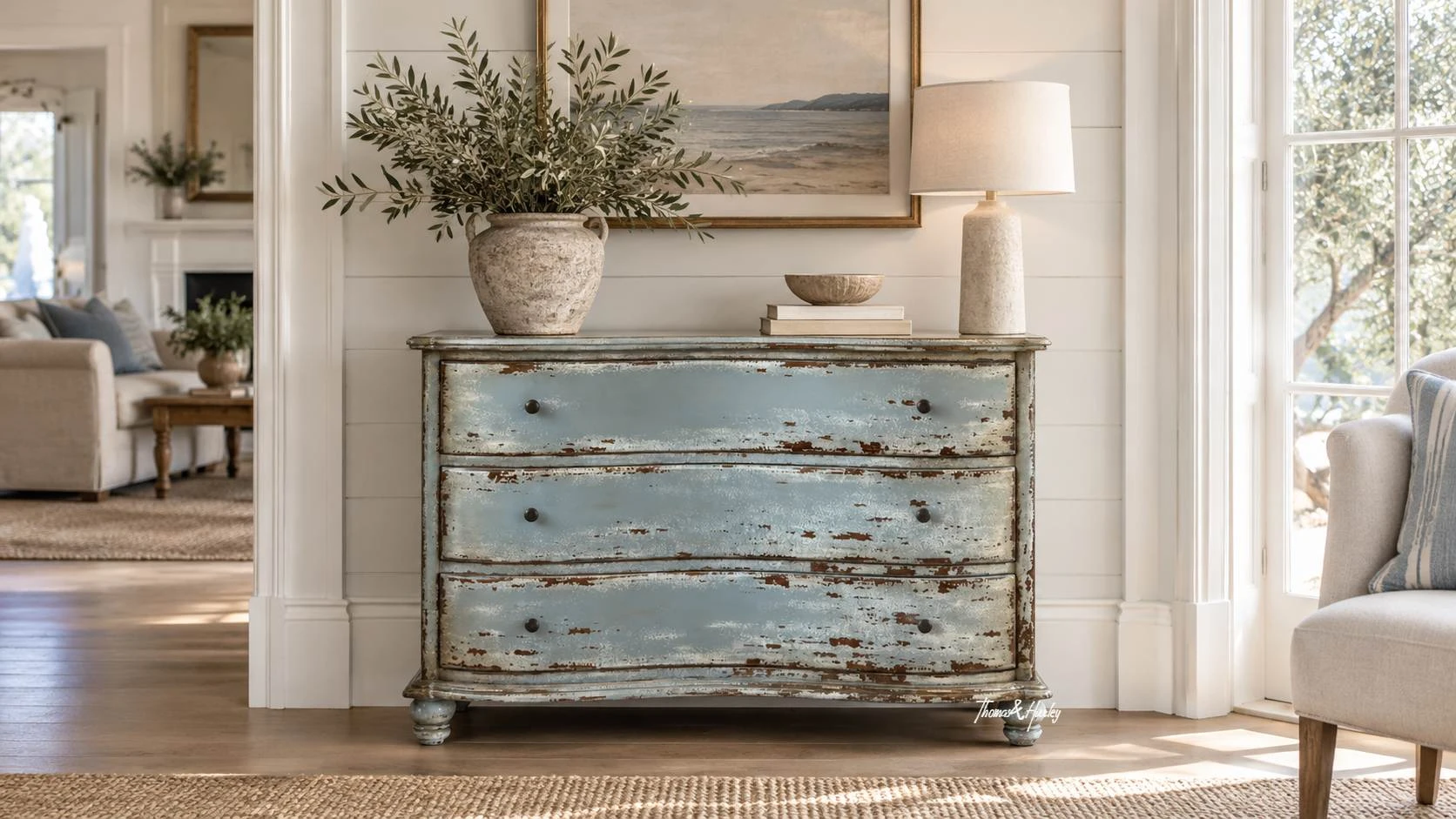
There is something compelling about furniture that does not look newly made.
A softened edge, an irregular painted surface, a glimpse of darker timber beneath a pale finish. These details create a sense of history that perfectly polished furniture rarely achieves. They suggest that a piece has evolved over time, even when it has been chosen for a thoroughly contemporary home.
This is the enduring appeal of patina.
For interiors increasingly defined by warm neutrals, natural materials and quiet architecture, furniture with character can provide the element that prevents a room from feeling overly resolved. A beautifully distressed chest or sculptural commode introduces contrast without requiring colour for colour's sake. It can make a minimalist room feel warmer, a Hamptons interior feel more layered, or a contemporary space feel as though it has developed gradually rather than arriving fully styled.
The Ashworth 3 Drawer Bombe Chest, Finch 3 Drawer Chest, Penwood 3 Drawer Bombe Chest, Mondrich 3 Drawer Chest and Mondrich Commode with Drawers by Thomas & Hurley explore this idea from different directions. Their finishes, proportions and silhouettes demonstrate how antique-inspired furniture can sit comfortably alongside modern architecture, natural timber, linen, stone and understated decorative objects.
What Makes Patina So Appealing?
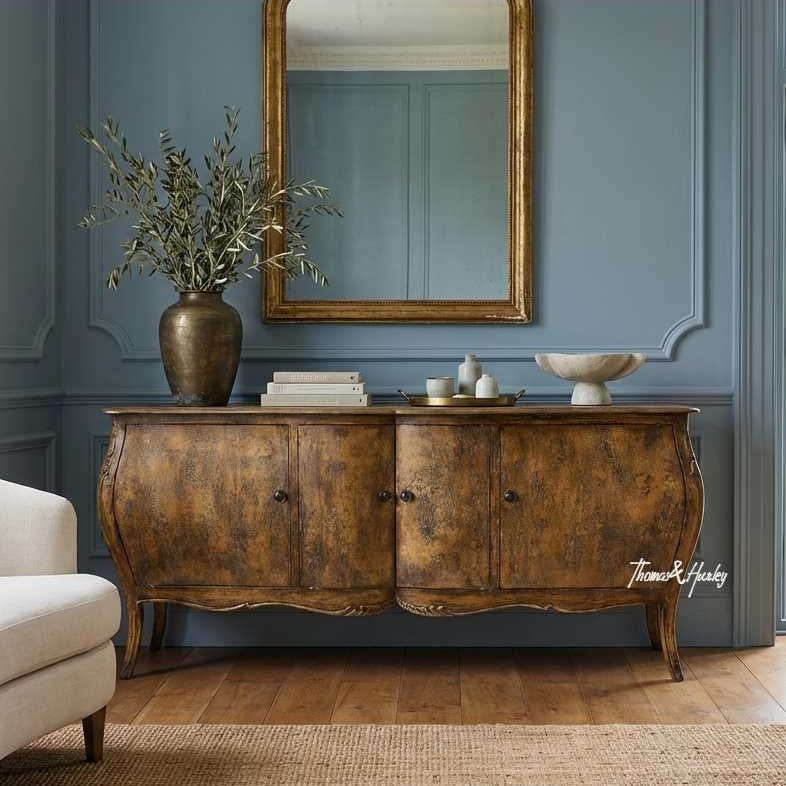
Perfect surfaces reflect light evenly. Patinated surfaces do something more interesting.
Paint catches differently across raised details and edges. Darker tones emerge beneath lighter layers. Small variations in colour create depth that changes throughout the day as natural light moves through a room.
The effect is subtle, but important.
Instead of reading as a single block of colour, the furniture gains visual texture. Even an otherwise simple chest of drawers can become an architectural feature because the eye notices the variations across its surface.
This is one reason distressed furniture works particularly well within contemporary interiors. When walls, flooring and upholstery are restrained, a piece with an aged finish introduces detail without requiring elaborate styling.
There is also an emotional quality to patina. Interiors composed entirely of pristine furniture can sometimes feel formal or untouched. A piece that appears gently weathered introduces ease. It suggests permanence rather than newness, something collected rather than simply purchased.
That feeling is particularly compatible with the relaxed sophistication of Australian interiors.
Ashworth: The Quiet Elegance of the Bombe Form
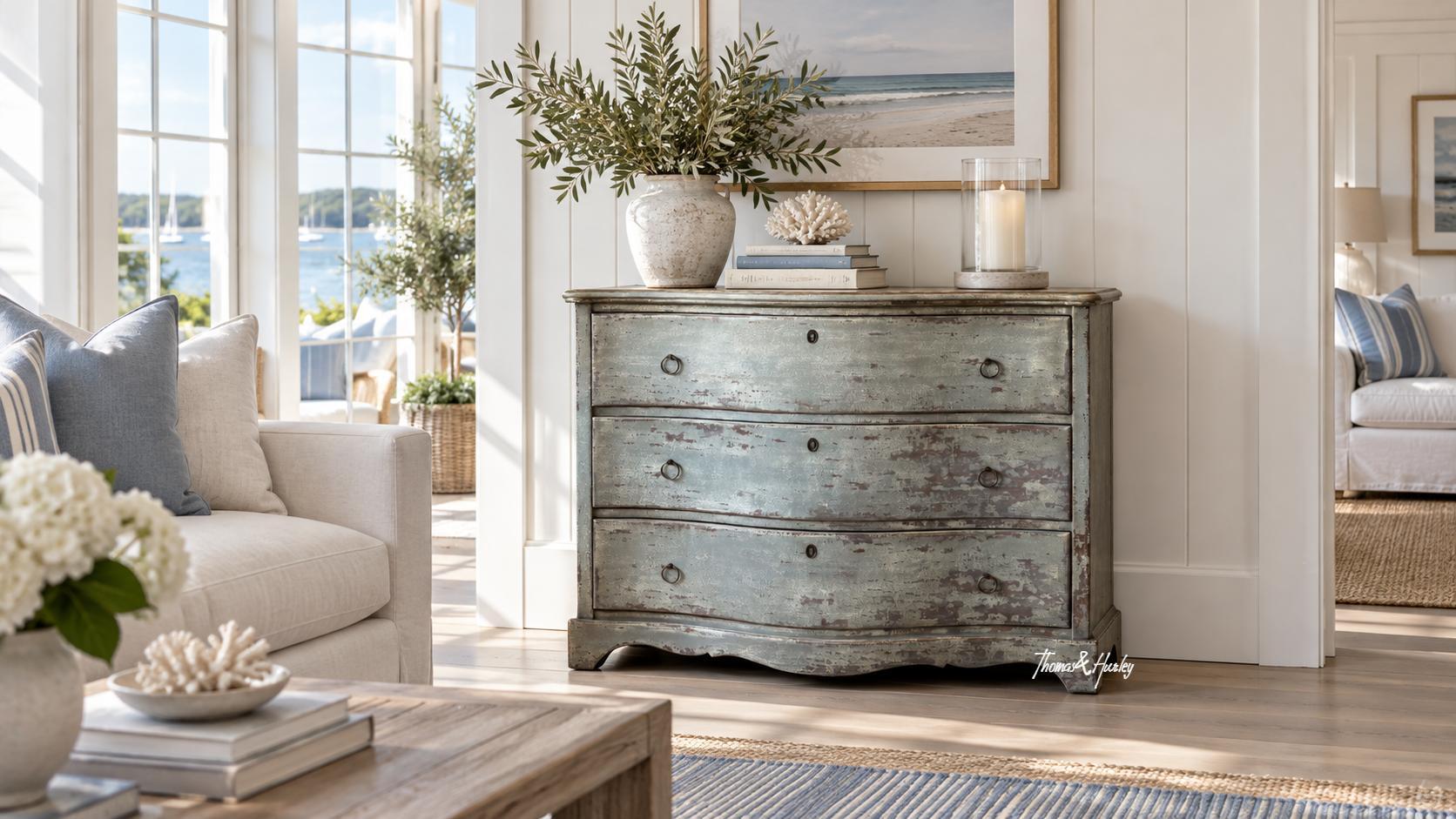
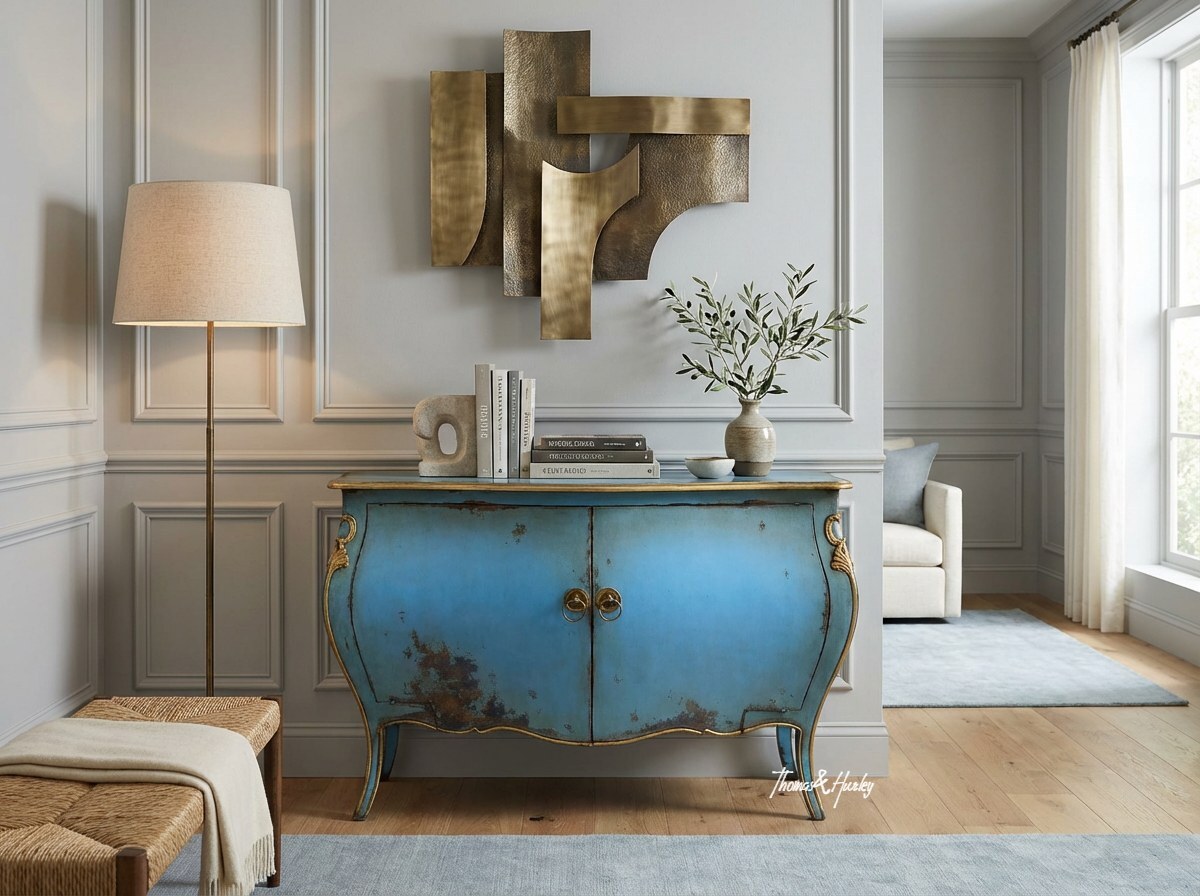
The Ashworth 3 Drawer Bombe Chest combines one of furniture design's most recognisable historic silhouettes with a softly aged painted finish.
The bombe form is defined by its subtle outward curve, creating a chest that feels more sculptural than a conventional straight-front piece. Originating in European cabinetmaking traditions, this curved silhouette brought movement to furniture that might otherwise have been purely functional.
In the Ashworth, however, the effect is restrained.
Its pale, weathered finish softens the form, allowing the curves to feel relaxed rather than ornate. The result sits comfortably between French Provincial furniture, country-house design and contemporary Australian interiors.
Against warm plaster, natural oak flooring or soft white walls, the Ashworth introduces exactly the kind of imperfection that makes a neutral room interesting.
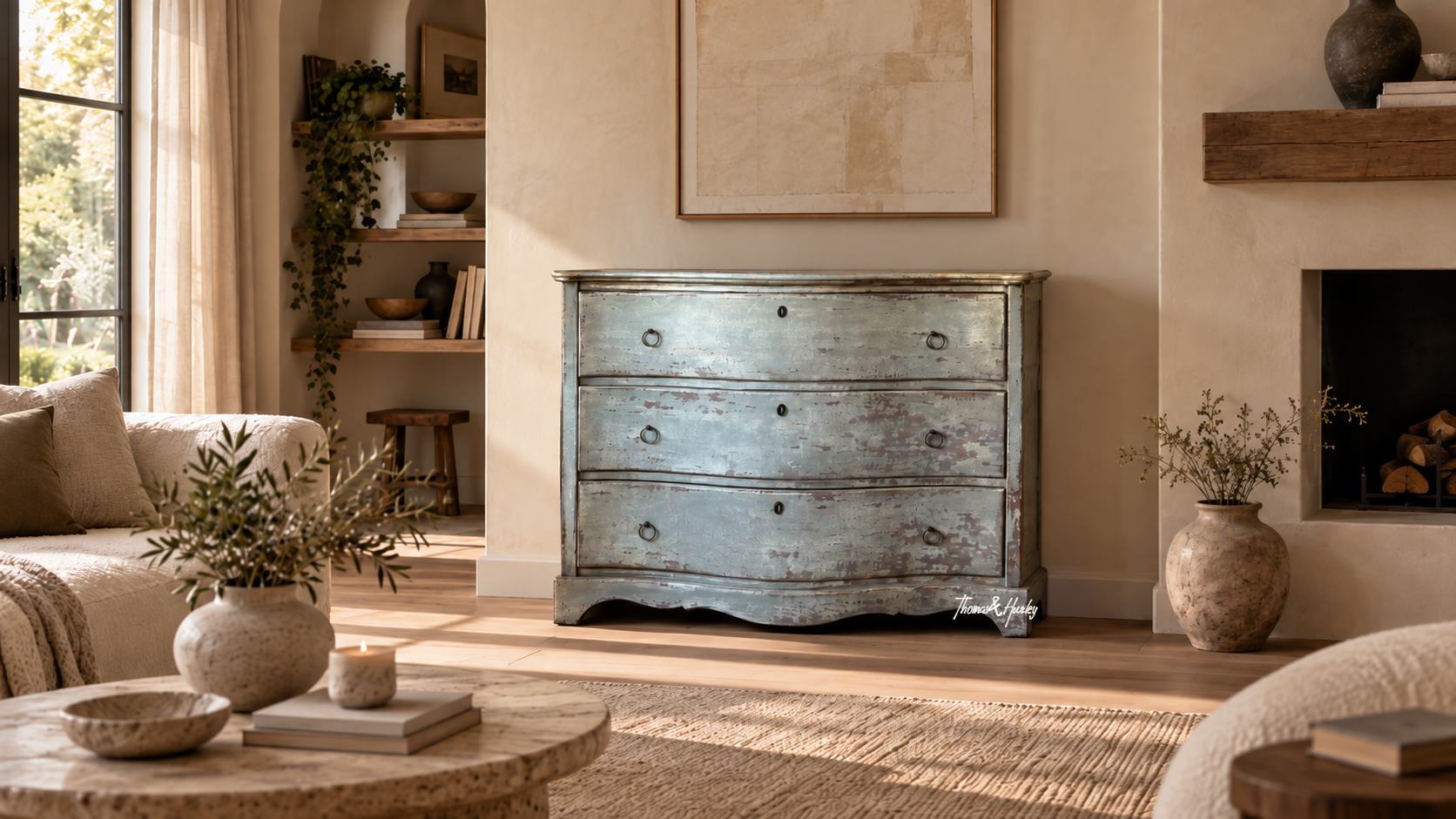
It could sit beneath an artwork in an entry, provide storage in a bedroom, or act as a decorative chest within a living room. Styled simply with a ceramic vessel, greenery and perhaps a pair of candlesticks, its finish becomes part of the decoration.
The furniture itself does much of the work.
Finch: Character Within a More Architectural Interior
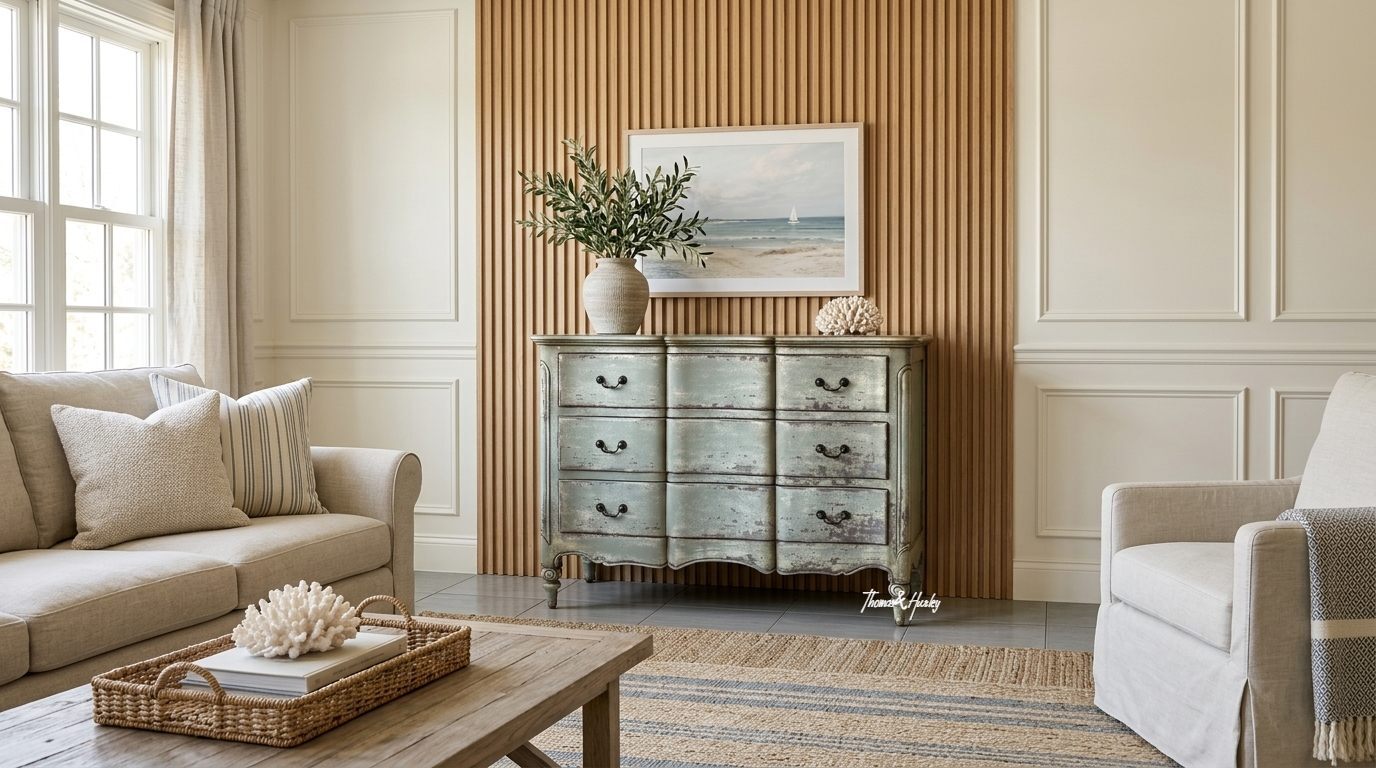
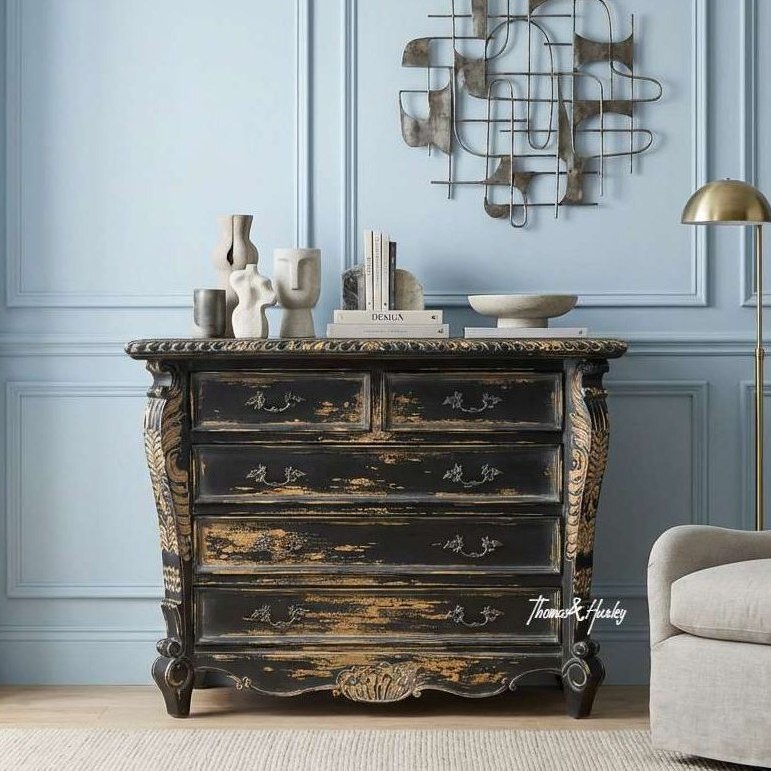
The Finch 3 Drawer Chest demonstrates how aged furniture can work within a much more contemporary architectural setting.
Set against vertical timber detailing, its distressed painted surface provides an immediate counterpoint to the precision of the surrounding room. The timber wall is repetitive and controlled. The chest is irregular and softly worn.
Together, they are more interesting than either would be alone.
This type of contrast is becoming increasingly important in sophisticated interiors. Rather than decorating entirely within one design period, designers often combine furniture with different visual histories.
A contemporary room might include clean wall panelling, modern art and simple upholstered seating, then introduce a chest that appears as though it has been collected from somewhere entirely different.
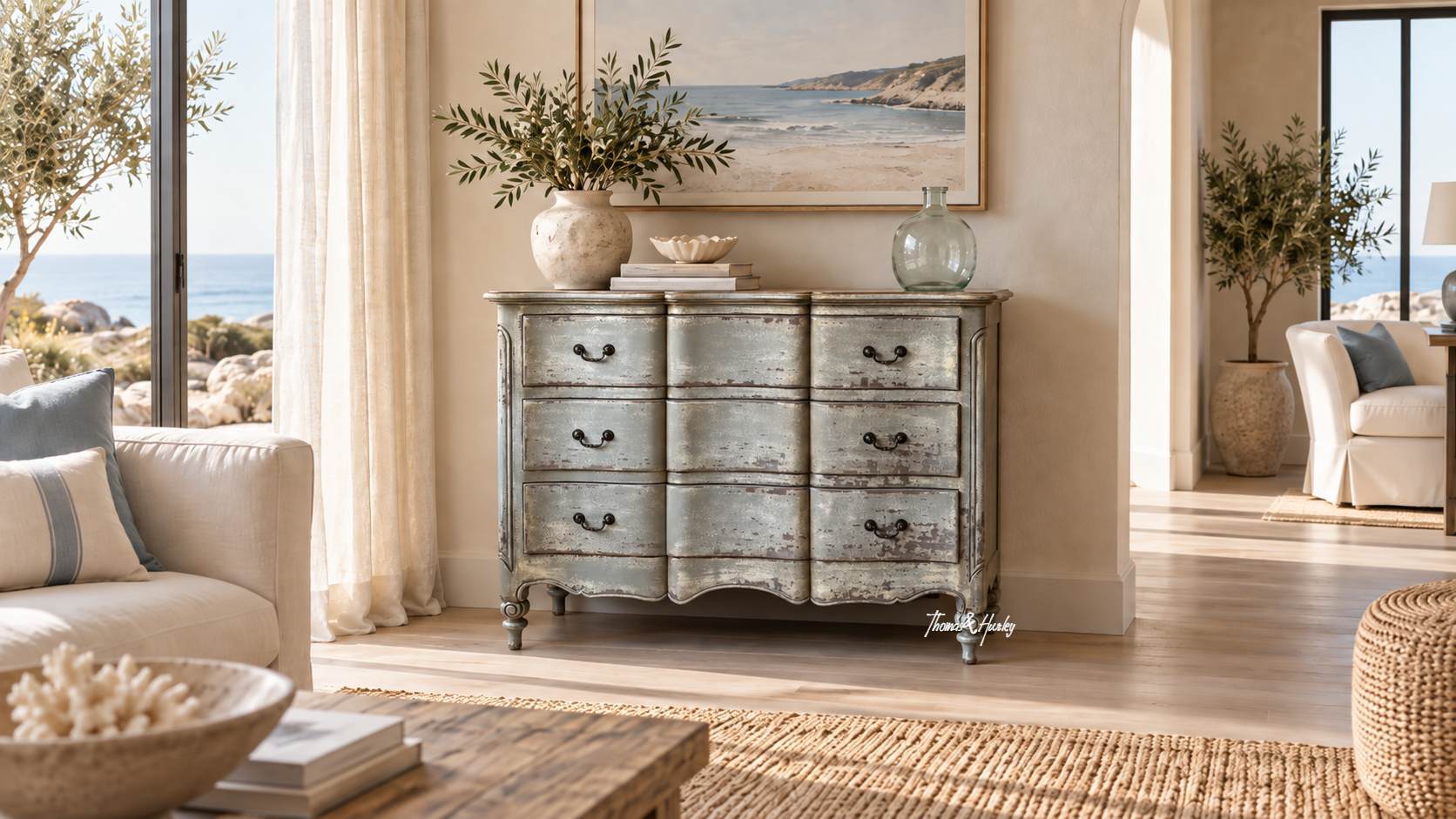
The Finch works particularly well in this context because its proportions remain calm and balanced. Its character comes primarily from the surface and detailing rather than excessive ornament.
For homeowners drawn to warm minimalism, this is an effective way to introduce personality without compromising the quietness of the room.
Penwood: Where Patina Meets Sculpture
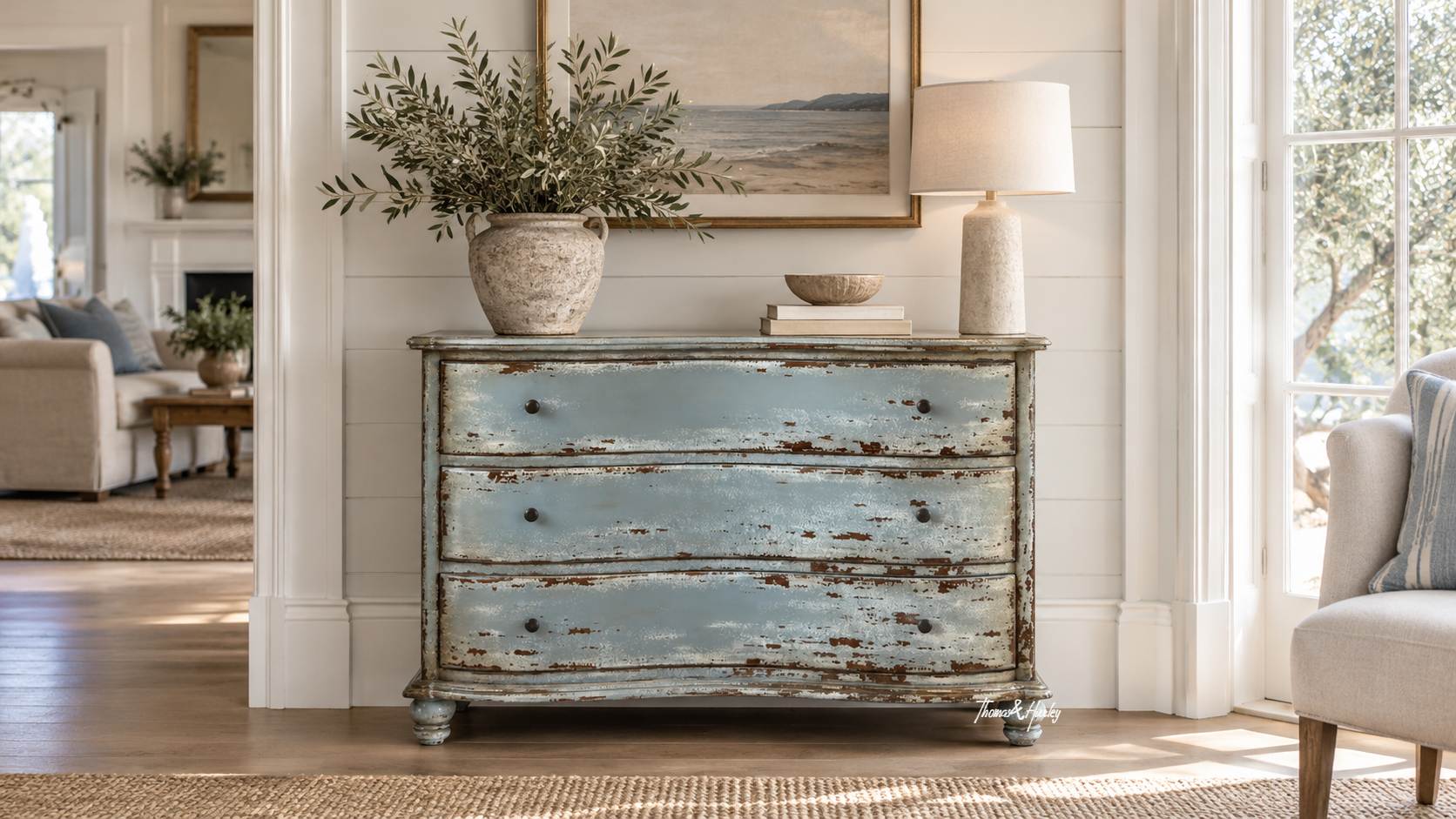
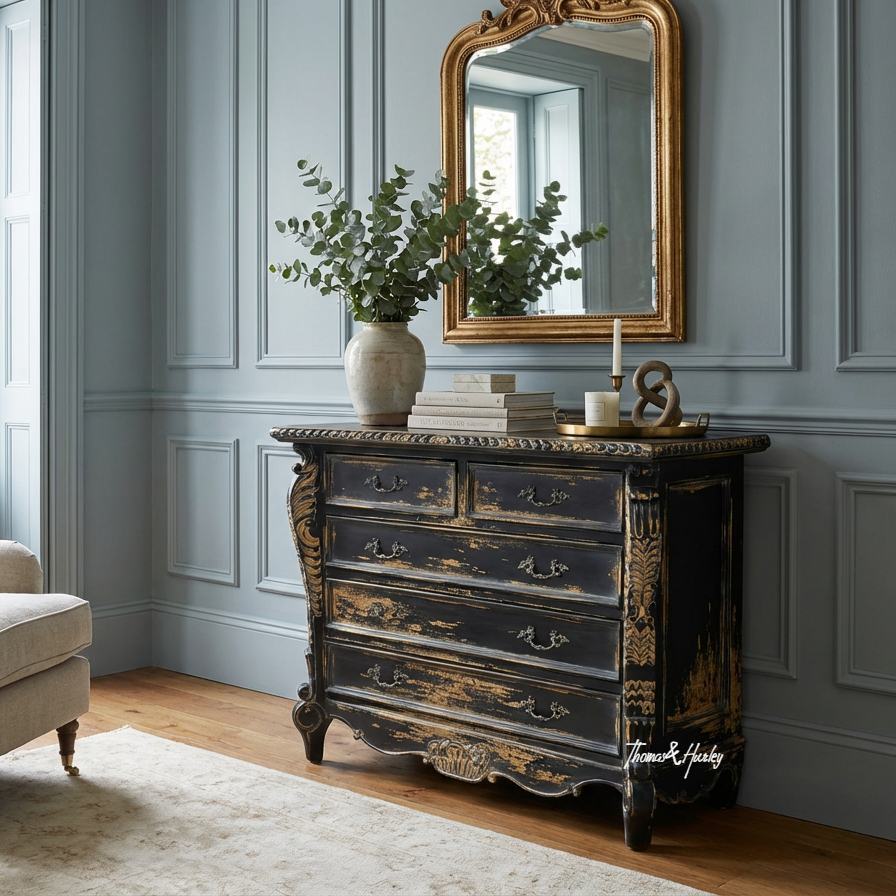
The Penwood 3 Drawer Bombe Chest takes the relationship between surface and silhouette further.
Its generous curved front immediately gives the piece presence, while the distressed pale finish highlights those curves rather than disguising them. Areas of wear create darker lines and irregularities that trace the shape of the furniture.
This interaction between finish and form is one of the most appealing qualities of painted French-inspired furniture.
A completely uniform finish can sometimes flatten a curved piece visually. Patina does the opposite. It accentuates edges, mouldings and transitions in the cabinetmaking, making the furniture feel more dimensional.
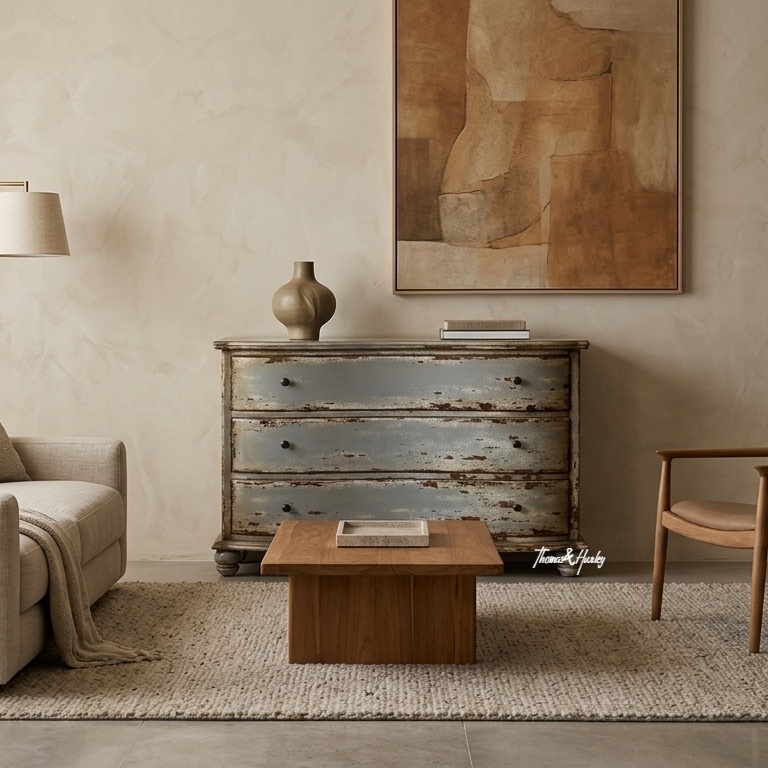
The Penwood therefore works particularly well as a statement chest.
In a Hamptons interior, it could introduce a European influence alongside linen upholstery, pale timber and natural fibres. In a more contemporary room, it could provide an intentionally decorative counterpoint to clean architecture.
And in a French Provincial setting, its form naturally connects with other curved or carved pieces without requiring the entire interior to become traditionally styled.
That versatility is important.
The most successful character furniture does not dictate the room around it. It gives the room something to respond to.
Mondrich: A Simpler Interpretation of Aged Furniture
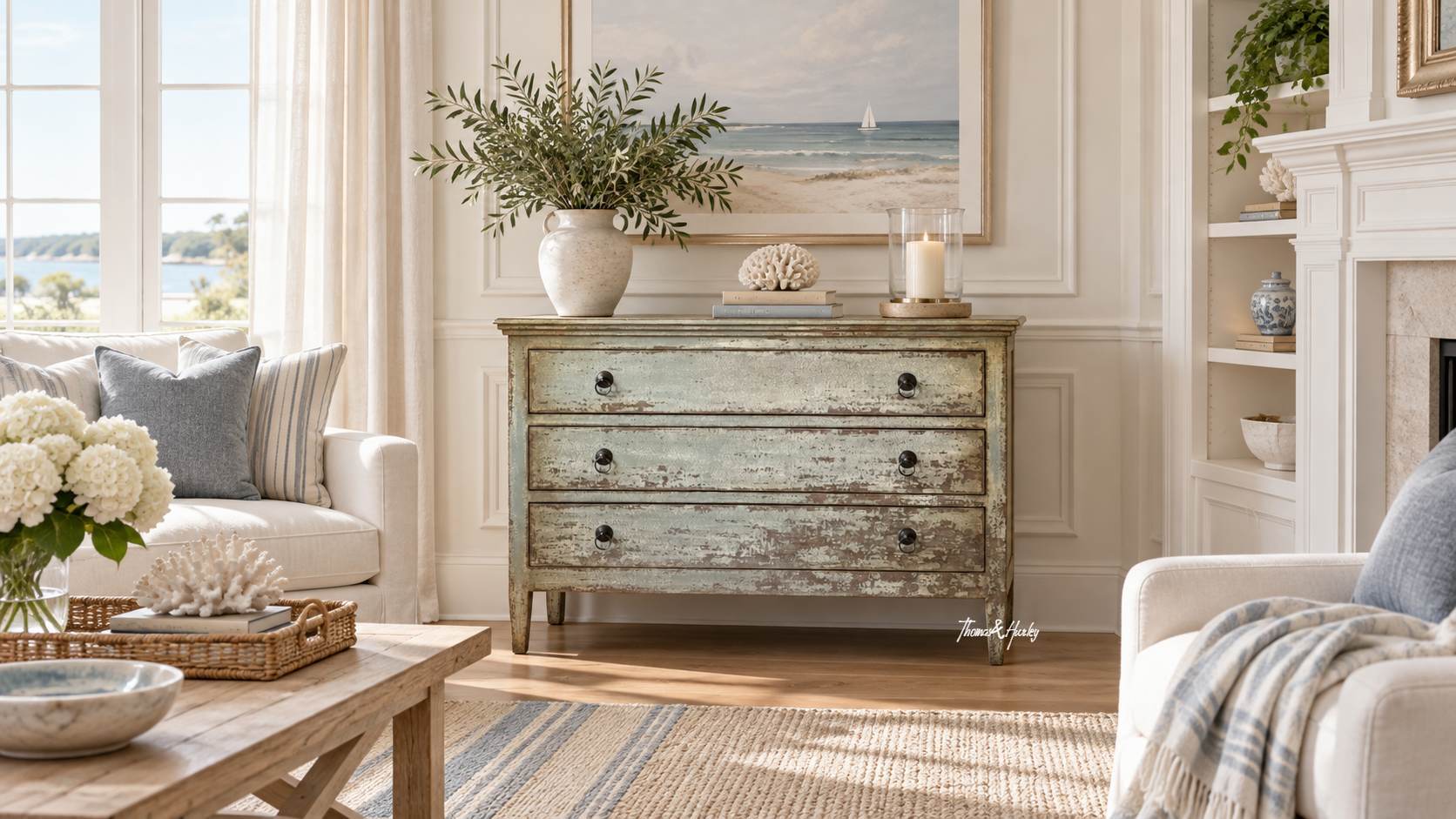
The Mondrich 3 Drawer Chest presents a quieter interpretation of the same idea.
Its silhouette is more restrained, placing greater emphasis on the weathered surface and simple proportions. This makes it particularly useful in interiors where texture is desired but a strongly decorative shape might feel excessive.
Against a timber wall, the contrast is particularly effective.
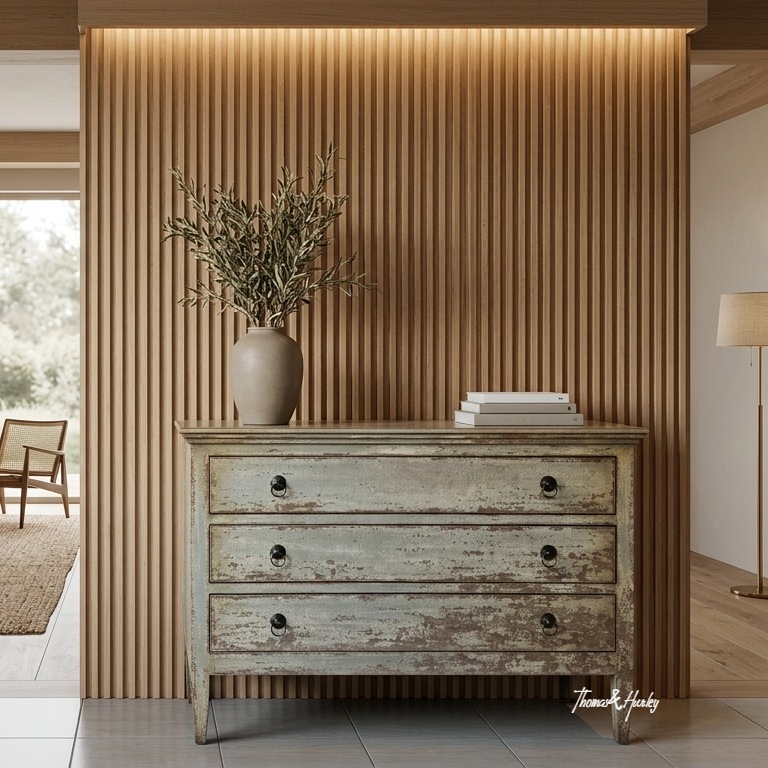
The aged painted finish breaks up the repetition of the vertical timber while still sharing its natural, tactile quality. Both surfaces reveal variation. Neither feels synthetic or overly polished.
This relationship between materials is central to many of today's warm interiors.
Timber, linen, stone, woven fibres and aged finishes all share an ability to reveal texture. They become more interesting when viewed closely and often improve visually when they contain subtle irregularities.
The Mondrich can therefore sit easily within a contemporary coastal, Hamptons, country or warm minimalist room.
It does not need to announce a particular style.
Its character is enough.
The Mondrich Commode: Dark Furniture as a Focal Point
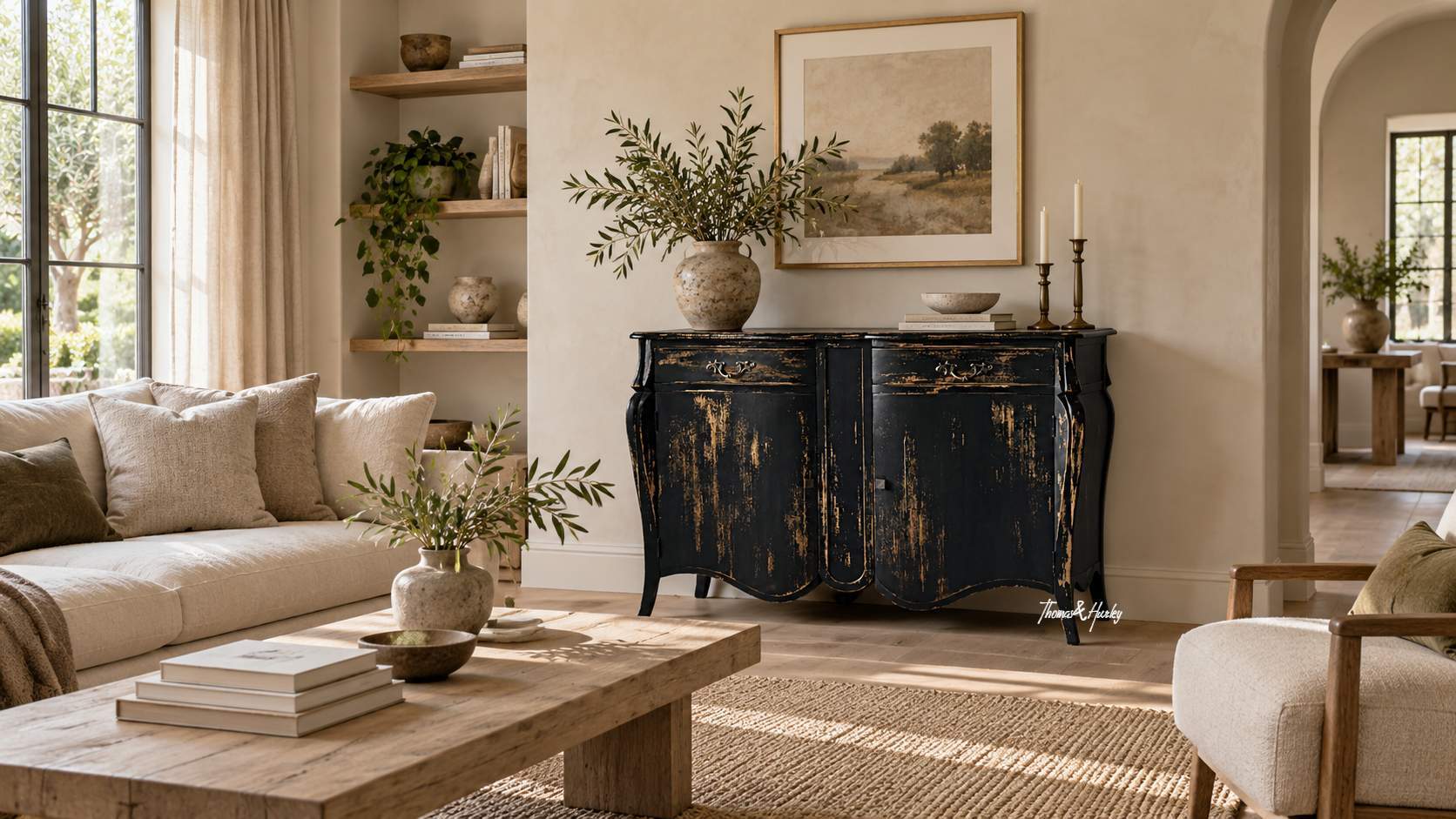
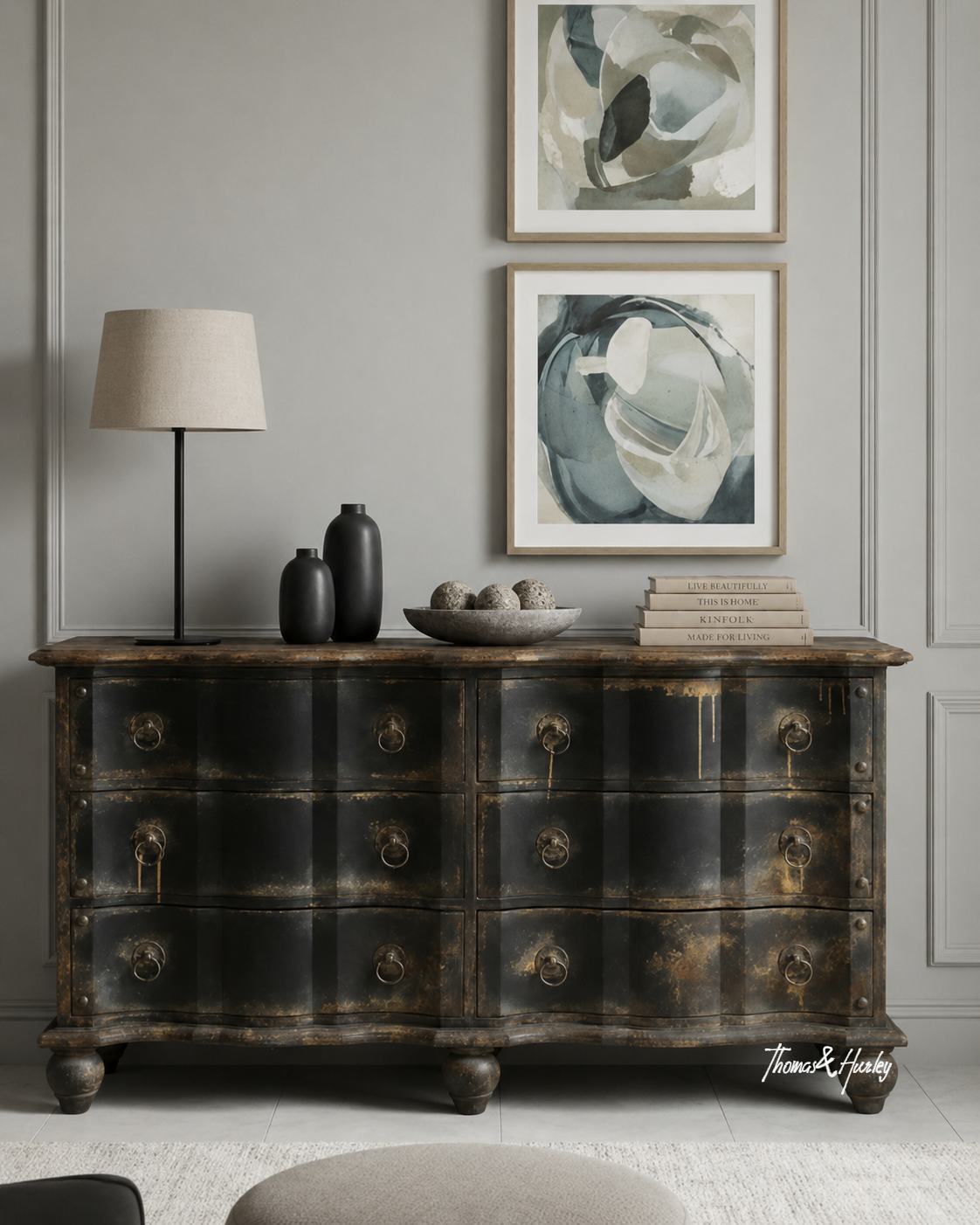
The Mondrich Commode with Drawers shifts the mood entirely.
Where the lighter chests soften into pale rooms, the dark Mondrich becomes an anchor.
Its deep finish, highlighted by warmer aged detailing, gives the piece a dramatic presence. The curved silhouette feels almost sculptural against contemporary timber panelling, demonstrating how traditional furniture can become unexpectedly modern when its surroundings are simplified.
This is an important styling principle.
Highly decorative furniture often benefits from restraint around it.
Against patterned wallpaper, ornate curtains and numerous decorative objects, a curved commode might read as overtly traditional. Place the same piece against clean architectural lines, pale oak flooring and a limited palette, and its form suddenly becomes more graphic.
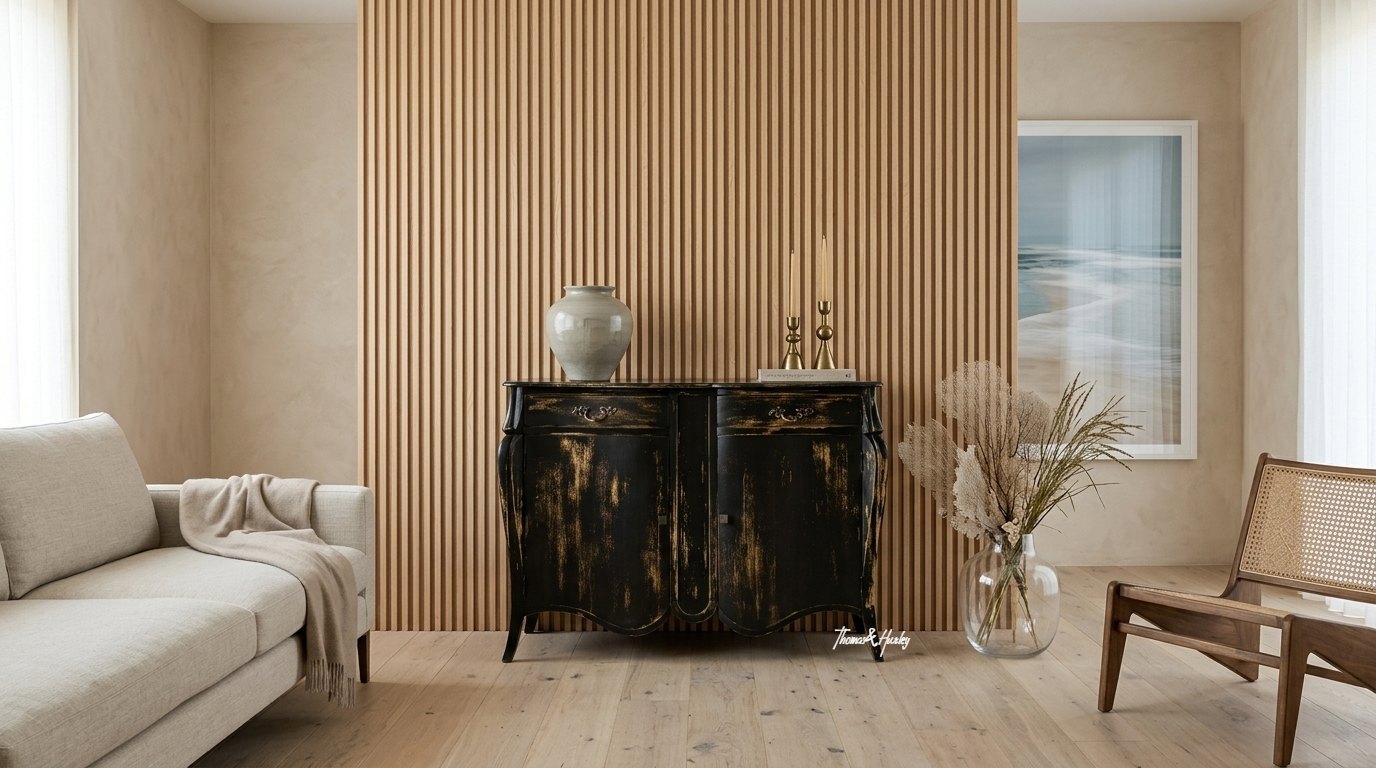
The contrast allows us to appreciate the furniture differently.
The dark Mondrich could work particularly well in an entry hall, living room or dining space where a stronger visual anchor is needed. A single ceramic vessel or a small collection of books may be all the styling required.
There is no need to fill every surface.
The silhouette itself provides the interest.
Why Old and New Work So Well Together
Some of the most inviting interiors resist being placed within a single era.
A newly built room may contain an antique table. A traditional house may introduce contemporary lighting. A sculptural French-inspired chest may sit beneath an abstract artwork.
These combinations create depth because they avoid the sense that everything was chosen from the same collection at the same moment.
Furniture with patina is particularly effective at creating this effect.
Even within new architecture, it introduces a suggestion of age. The room begins to feel collected rather than decorated.
This is why pieces such as the Ashworth, Finch, Penwood and Mondrich chests work beyond explicitly French Provincial interiors. Their historic references become more interesting when paired with something unexpected.
Try a bombe chest against vertical timber panelling.
Place an aged blue-grey chest below contemporary artwork.
Pair a dark curved commode with pale oak flooring.
Combine a weathered finish with clean-lined upholstery.
The contrast gives both elements greater presence.
Styling Patinated Furniture in a Contemporary Home
The key is restraint.
If the furniture already contains strong texture, allow it room to be seen. Rather than surrounding it with many decorative objects, choose a small number of pieces with equally tactile materials.
A ceramic vessel, hand-thrown bowl, linen-shaded lamp, stack of books or branch of olive foliage may be enough.
Natural materials are particularly effective because they share the irregular quality of the furniture. Stone, timber, linen and woven fibres prevent the distressed finish from feeling isolated within the room.
Colour can also be kept quiet.
Warm white, cream, sand, oatmeal, muted green, soft blue and natural oak all provide sympathetic backgrounds for aged furniture. Dark pieces such as the Mondrich Commode can then be used deliberately to introduce weight and contrast.
The aim is not to recreate a historic interior.
It is to allow furniture with historic character to become part of a contemporary one.
Furniture That Becomes More Than Storage
A chest of drawers is, fundamentally, practical furniture.
But once proportion, finish and silhouette become part of the equation, its role changes.
The Ashworth can become an elegant focal point within an entry. The Finch can soften contemporary architecture. The Penwood can introduce sculptural curves into a restrained room. The Mondrich 3 Drawer Chest can add texture without overwhelming its surroundings, while the dark Mondrich Commode can anchor an entire composition.
Each provides storage.
But each also contributes atmosphere.
And increasingly, that is what separates memorable furniture from purely functional furniture.
A More Relaxed Approach to Luxury
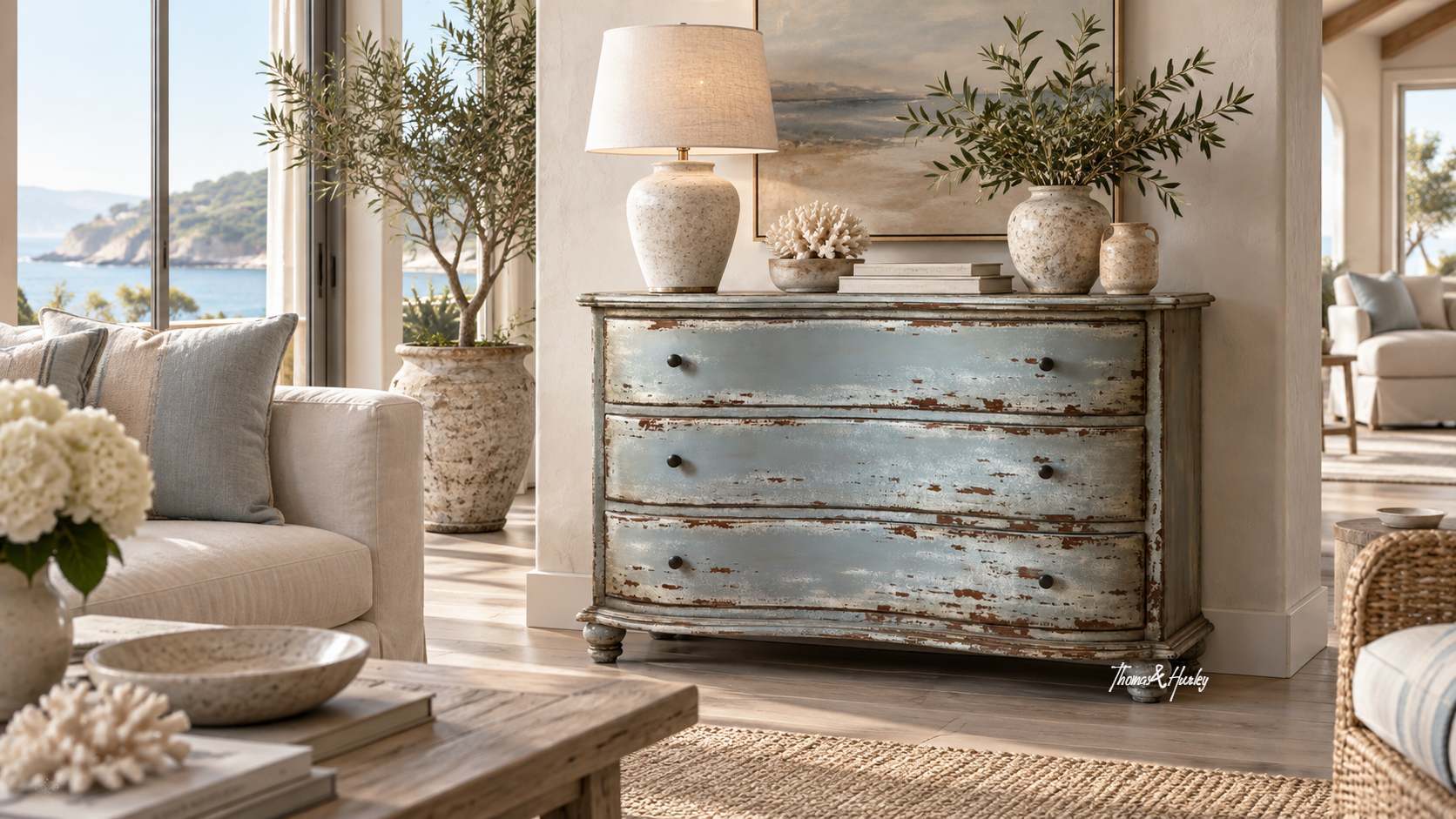
Luxury interiors do not always need flawless surfaces.
Sometimes the most sophisticated rooms are the ones that allow a little wear, irregularity and history into the composition.
Patina introduces that sense of ease.
It works particularly well within Hamptons style interiors, French Provincial homes, contemporary coastal spaces and warm minimalist rooms, because these styles already value natural materiality and quiet detail.
A distressed chest can bring warmth to new architecture. A bombe silhouette can provide movement within a room dominated by straight lines. A dark commode can create contrast within an otherwise pale palette.
These are relatively small interventions, yet they can completely change the character of a room.
At Thomas & Hurley, pieces such as the Ashworth 3 Drawer Bombe Chest, Finch 3 Drawer Chest, Penwood 3 Drawer Bombe Chest, Mondrich 3 Drawer Chest and Mondrich Commode with Drawers reflect this more collected approach to interiors.
Furniture need not look untouched to feel luxurious.
Sometimes it is the evidence of age, variation and imperfection that gives a piece its greatest presence.
And in a contemporary Australian home, that may be exactly what makes it feel at home.