

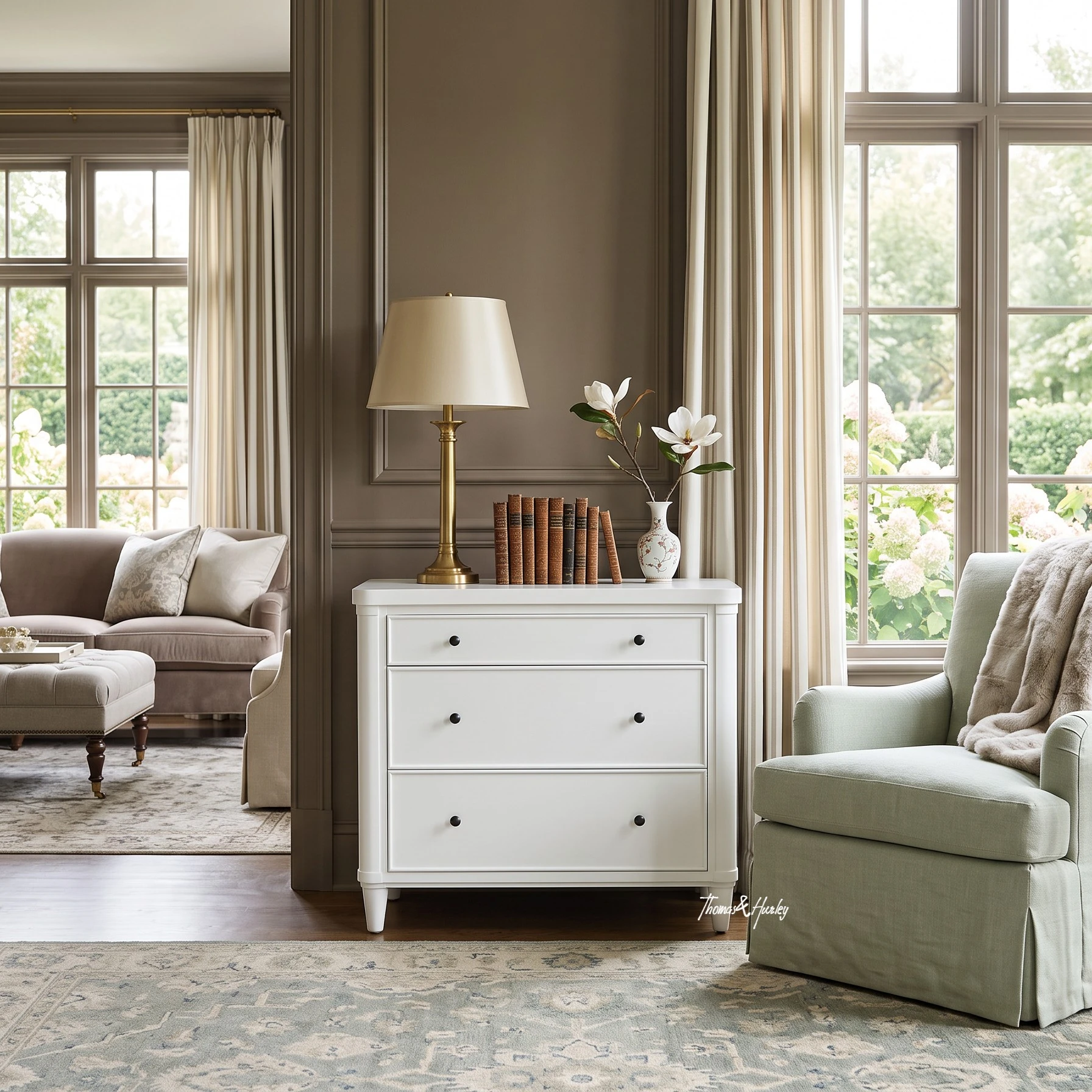
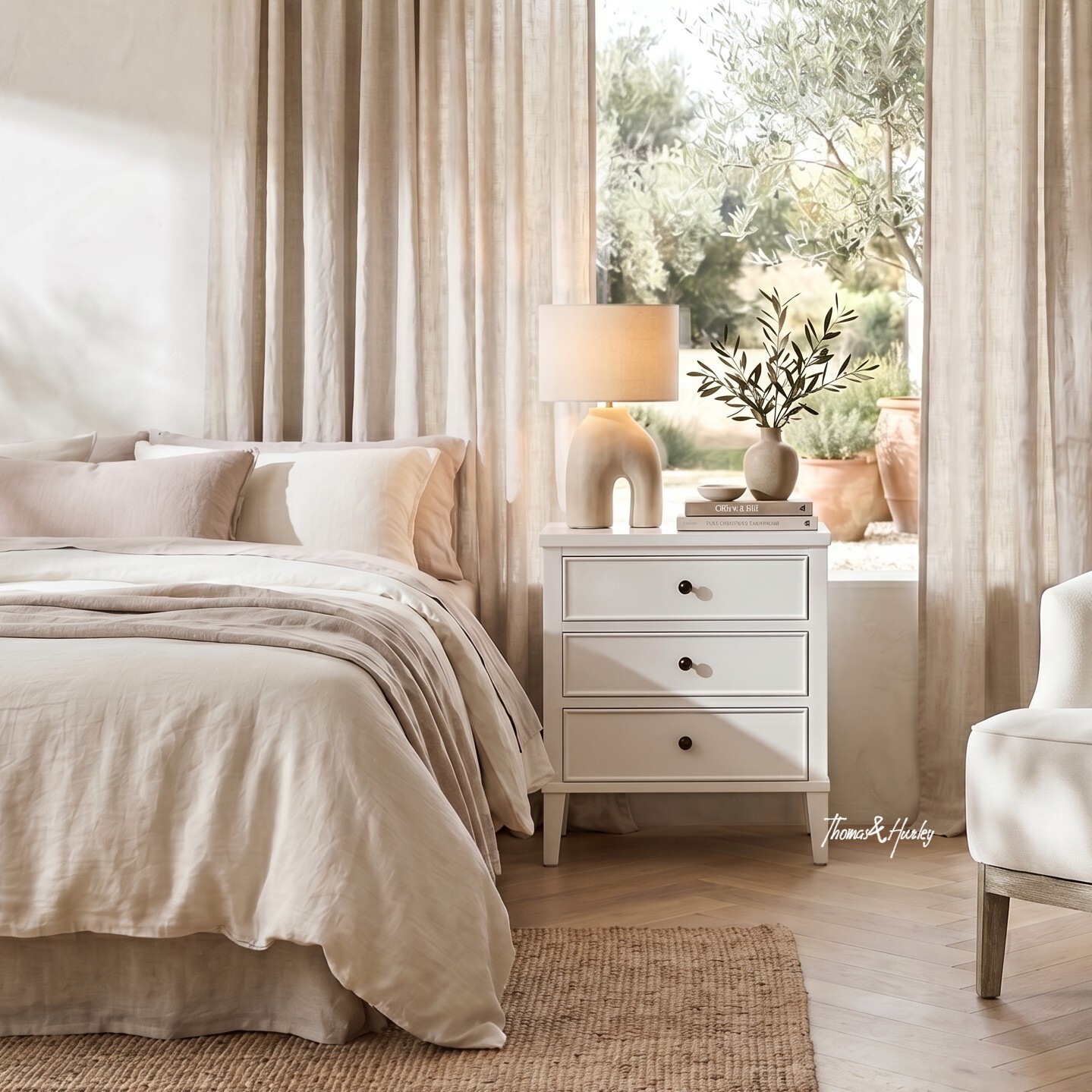
Sometimes the most useful furniture in a home is also the most easily overlooked.
A bedside table doesn't carry the scale of a dining table, the architectural presence of a wall unit or the visual weight of a large sideboard. Yet it is one of the pieces we interact with most often.
A lamp. A book. Reading glasses. A glass of water. A phone. A drawer for everything we would rather keep out of sight.
The best bedside furniture makes these everyday rituals easier while contributing quietly to the atmosphere of the room.
The Fremont, Lando, Piastri and Brynmore collections by Thomas & Hurley explore this idea through a wide range of bedsides and chests in both black and white finishes. From compact one-drawer tables to generous six-drawer chests, the pieces demonstrate how furniture can be practical without feeling purely functional.
They also make a case for looking beyond the bedroom.
A bedside can become an occasional table. A three-drawer chest can sit in an entry or living room. A six-drawer chest can provide substantial storage beneath artwork or a mirror. And the choice between black and white can completely change the character of the same room.
The result is furniture designed not simply for one place, but for the way homes actually evolve.
Why Bedside Furniture Matters More Than We Think
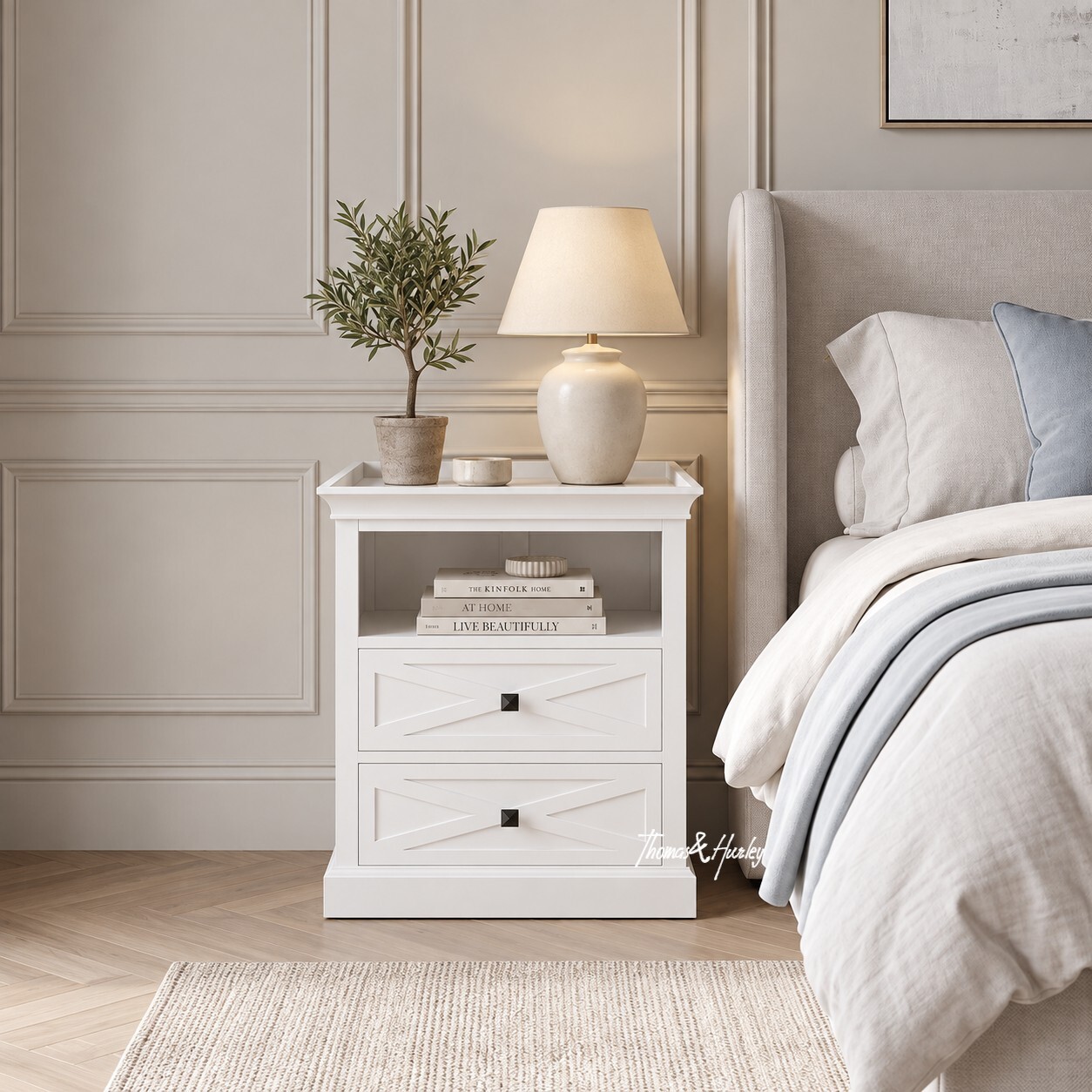
A bedroom can contain relatively few pieces of furniture, which means every one of them has an outsized influence on the room.
The bed naturally takes centre stage.
The bedside tables frame it.
Because they sit directly beside the bed, their scale, height, finish and detailing become part of the overall composition. A bedside that is too small can feel visually lost. One that is too bulky can crowd the room. A well-proportioned piece creates balance.
Function matters just as much.
Some bedrooms need only a small surface and a single drawer. Others benefit from three drawers of concealed storage. In guest rooms, an open shelf may make the space feel lighter and provide somewhere intuitive for books or personal belongings.
There is no single perfect bedside table.
The right piece depends upon how the room is used.
One Drawer, Three Drawers or Open Storage?
The range of configurations across the Fremont, Lando, Piastri and Brynmore collections is useful because it allows the bedside to be chosen according to function rather than simply appearance.
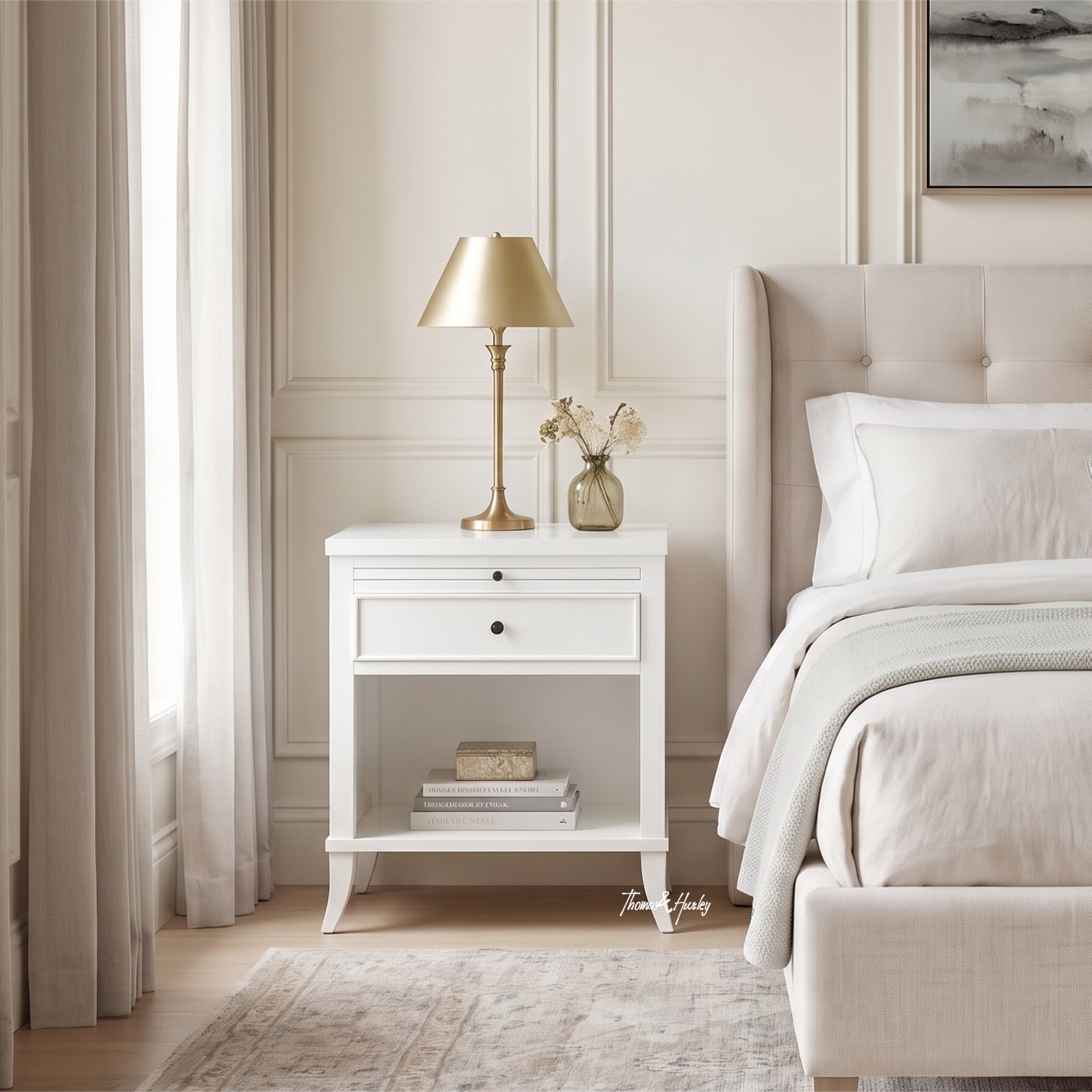
The Lando 1 Drawer Bedside and Piastri 1 Drawer Bedside, available in black and white, offer a lighter interpretation.
A single drawer provides somewhere for smaller necessities, while the open lower section keeps the piece visually airy.
This type of bedside works particularly well where a room already contains substantial furniture or where maintaining a sense of openness is important.
A guest bedroom is a natural setting.
A lamp can sit above, everyday items can be tucked into the drawer, and the open shelf can hold books or a small basket without making the room feel heavily furnished.
At the other end of the scale, the Lando 3 Drawer Bedside, Piastri 3 Drawer Bedside and Brynmore 3 Drawer Bedside provide considerably more concealed storage.
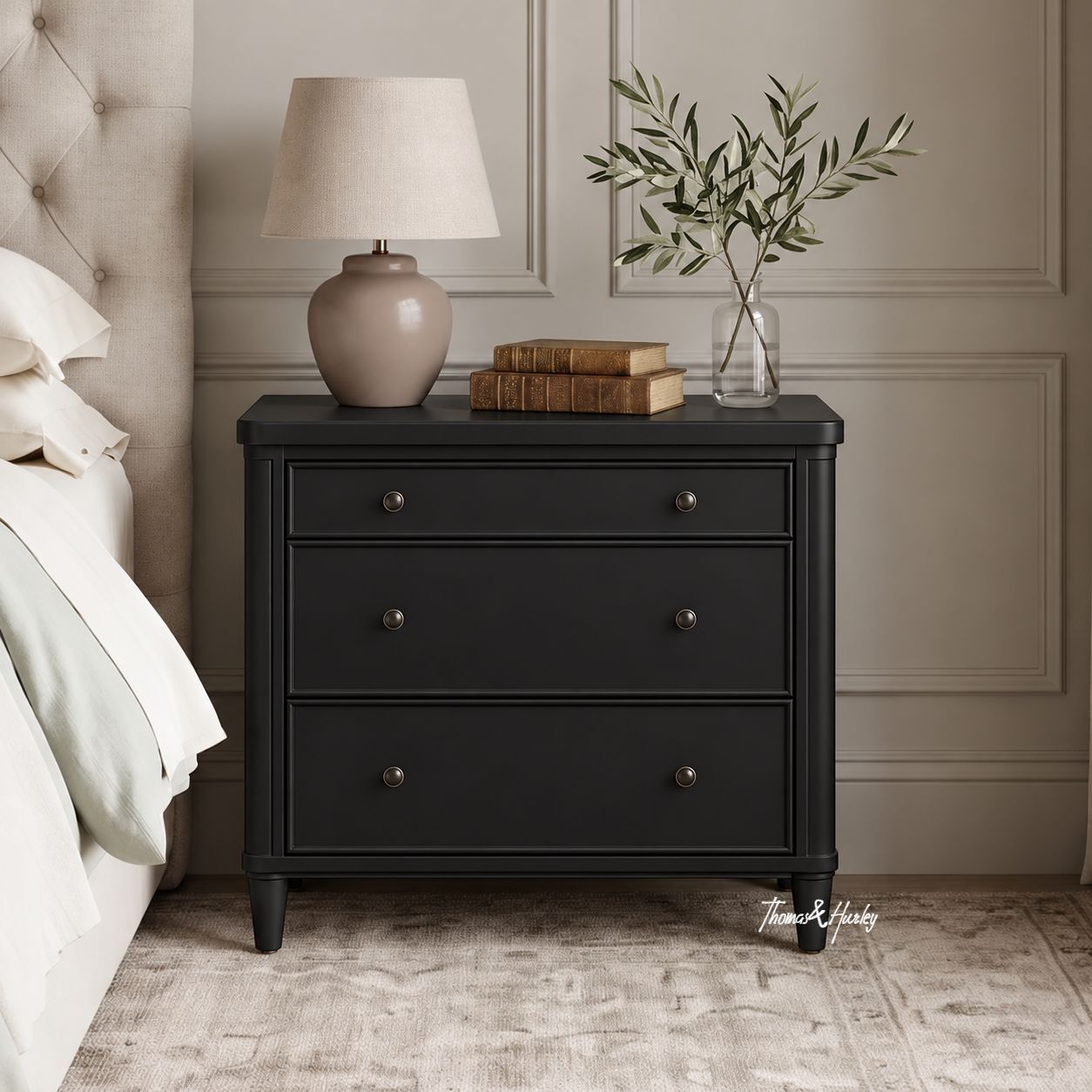
For a primary bedroom, that additional capacity can make a meaningful difference.
The bedside becomes a small chest in its own right.
The Petite Bedside: When Less Space Calls for Better Proportion
Not every bedroom can accommodate a substantial bedside.
This is particularly true in guest rooms, apartments or bedrooms where a wide upholstered bedhead leaves limited room at either side.
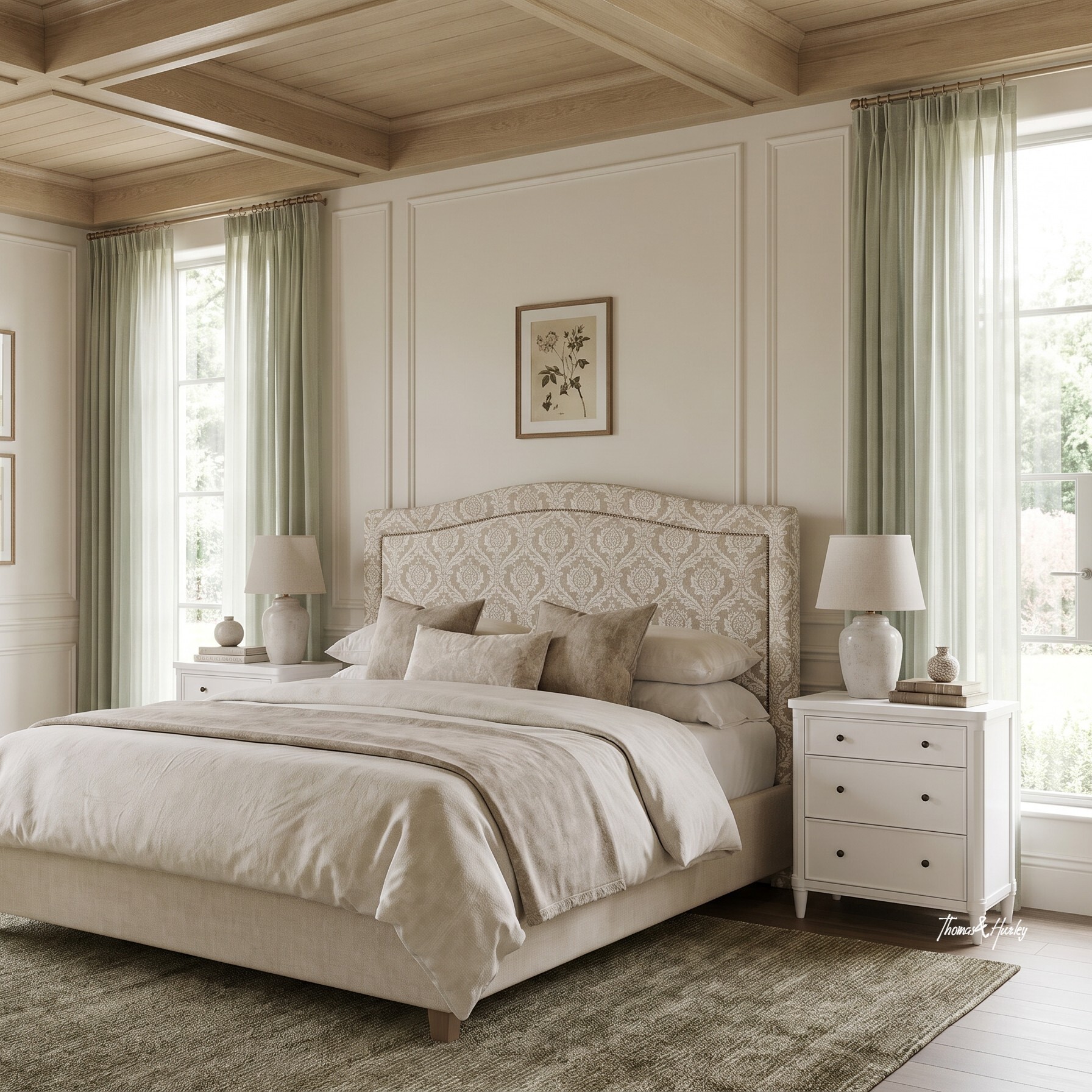
The Brynmore 3 Drawer Bedside Petite, offered in black and white, addresses this through proportion rather than by sacrificing storage entirely.
Its smaller footprint allows it to sit comfortably in tighter spaces while still offering three drawers.
This distinction is important.
Small-space furniture does not necessarily need to look minimal or temporary. Often, the better solution is simply a familiar piece redesigned at a more appropriate scale.
A petite bedside can still anchor a lamp, provide useful storage and visually frame a bed.
It simply asks less of the room.
Black Bedside Tables: Creating Definition
Black furniture behaves very differently from white.
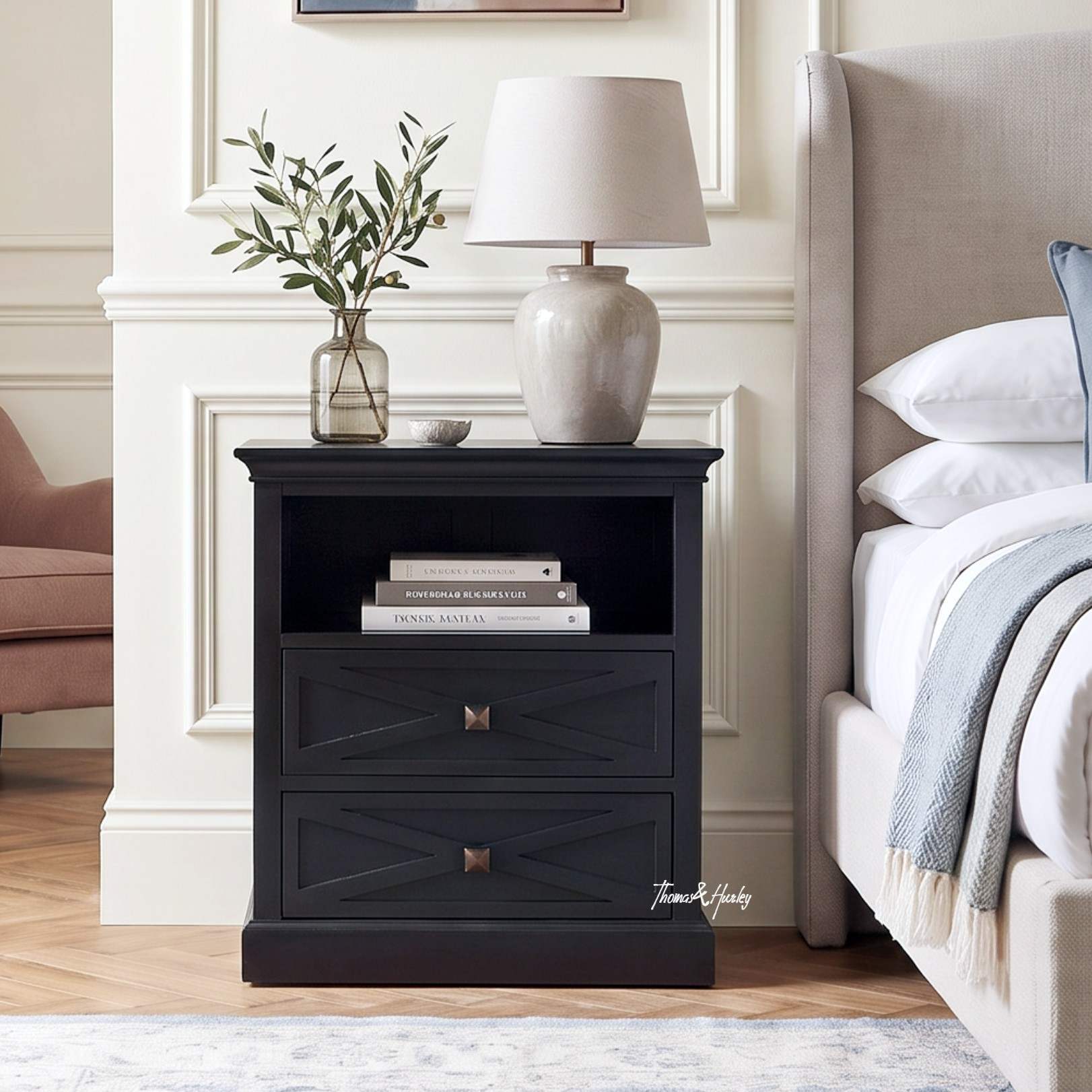
A black bedside table creates an immediate visual anchor.
Against warm white walls, linen upholstery or pale timber flooring, it introduces definition and contrast. The eye notices its silhouette clearly, which can make even a relatively compact piece feel intentional.
This is particularly effective in rooms dominated by neutral colours.
Consider the Piastri 3 Drawer Bedside in Black, Lando 3 Drawer Bedside in Black, or Brynmore 3 Drawer Bedside in Black.
Each can provide a grounding element beside an upholstered bed without requiring additional colour elsewhere in the room.
The black finish does the work.
A pale ceramic lamp, natural linen shade or small arrangement of greenery then becomes more prominent because of the contrast beneath it.
This is one of the reasons black furniture works so beautifully within contemporary-classic and Hamptons-inspired interiors.
It provides structure.
White Bedside Tables: Lightness and Continuity
White furniture creates almost the opposite effect.
Rather than contrasting strongly with the room, a white bedside table can integrate with architectural moulding, pale walls and soft upholstery.
The effect is quieter and often more expansive.
Pieces such as the Fremont Bedside Table in White, Lando 1 Drawer Bedside in White, Lando 3 Drawer Bedside in White, Piastri 3 Drawer Bedside in White, Piastri 1 Drawer Bedside in White, and Brynmore bedsides in White naturally suit rooms where softness is the priority.
In a Hamptons bedroom, white furniture can connect visually with wall panelling and joinery.
In a contemporary bedroom, it can allow artwork, upholstery and textiles to become the more dominant elements.
The furniture remains useful and present, but it does not demand attention.
Black or White: Which Should You Choose?
There is no universal answer.
The more useful question is: what does the room need?
If the interior already contains pale upholstery, cream walls and light timber, black can introduce structure.
If the room contains darker flooring, strong artwork or visually substantial furniture, white may provide relief.
Black can feel architectural.
White can feel integrated.
Black creates contrast.
White creates continuity.
Neither is inherently more traditional or contemporary.
Styling determines the final effect.
A black bedside beneath a sculptural ceramic lamp can feel warm and contemporary. A white bedside beside a tailored upholstered bed can feel crisp and classic.
The same principle applies to larger chests.
The Fremont Collection: Decorative Detail Without Excess
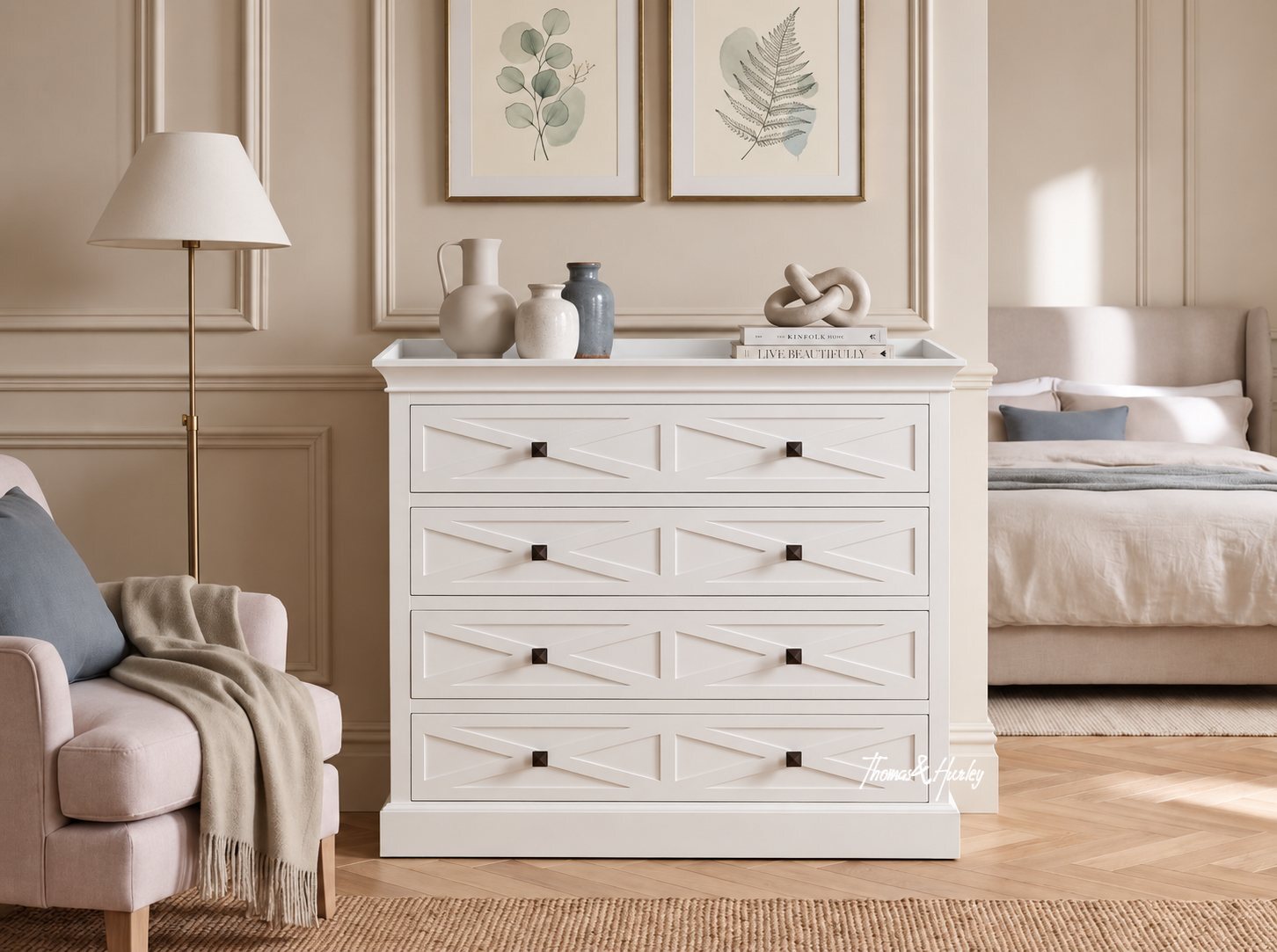
The Fremont Chest of Drawers in Black and Fremont Chest of Drawers in White introduce a more decorative face to bedroom storage.
The geometric drawer-front detailing gives the pieces character without relying on elaborate carving or excessive ornament.
That makes the Fremont particularly interesting in rooms where the furniture itself needs to provide some visual detail.
Against panelled walls, the geometry of the drawer fronts creates another layer of pattern.
In black, the effect becomes stronger and more graphic.
In white, the same detailing is softened by the lighter finish.
This demonstrates an important point about furniture colour.
Changing the finish does more than alter the palette.
It changes the way we perceive the design.
Lando: A Calm, Versatile Approach to Storage
The Lando collection takes a more restrained approach.
Across the Lando 1 Drawer Bedside, Lando 3 Drawer Bedside, Lando 3 Drawer Chest and Lando 6 Drawer Chest, the clean drawer fronts and understated hardware allow the proportions to become the focus.
This simplicity makes the collection especially versatile.
The Lando 3 Drawer Chest in White could sit naturally in a bedroom beneath a mirror, but it could just as easily work in a hallway beneath artwork.
The Lando 3 Drawer Chest in Black could become an elegant storage piece within a living room, particularly where its darker finish can be repeated through lighting, picture frames or smaller decorative details.
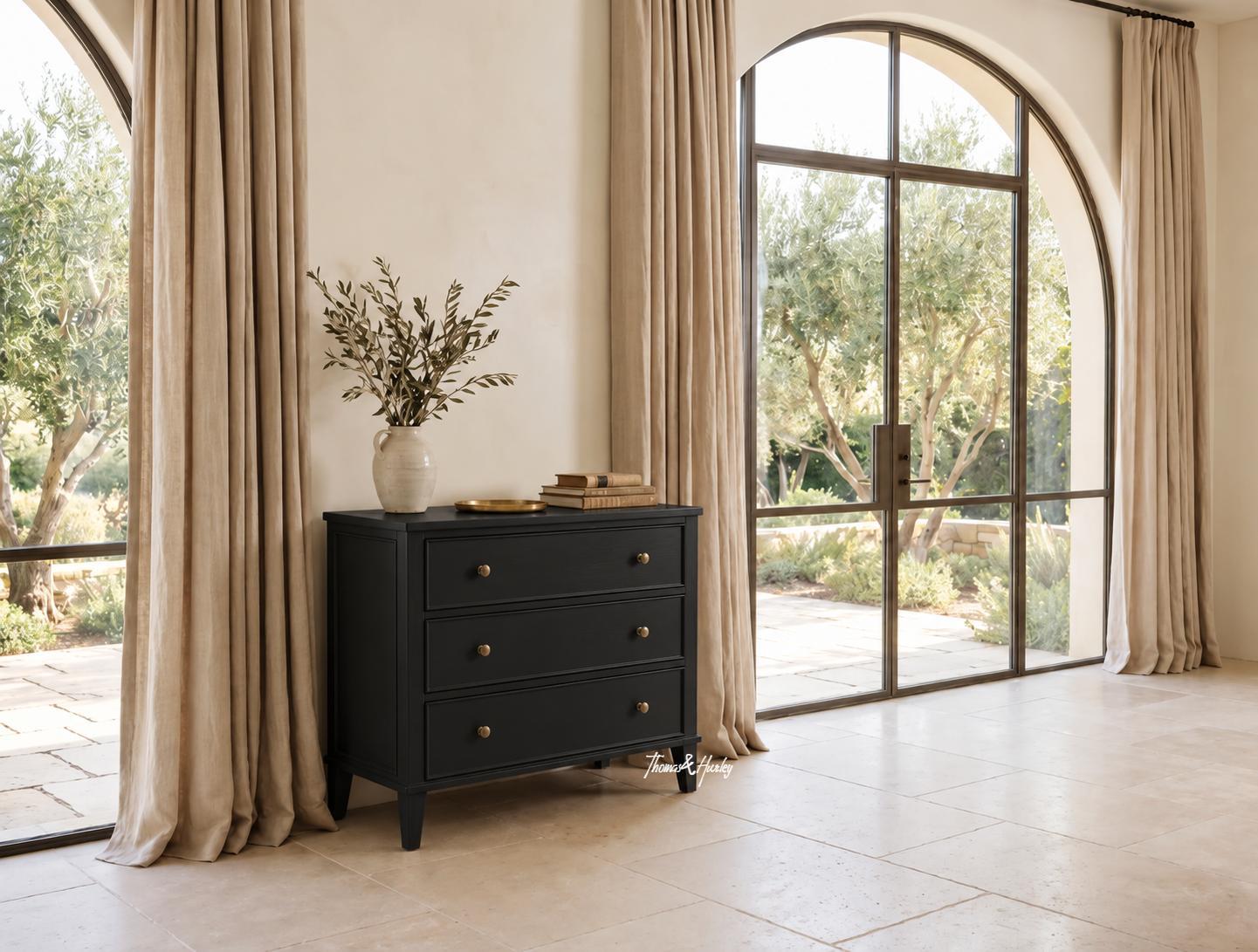
The Lando 6 Drawer Chests, in black or white, provide enough width to become substantial focal pieces.
That opens up possibilities beyond clothing storage.
Piastri: From Bedside to Full Bedroom Storage
The Piastri collection offers perhaps the clearest example of how one design language can move through different scales.
The range extends from the Piastri 1 Drawer Bedside through the Piastri 3 Drawer Bedside, Piastri 3 Drawer Chest and Piastri 6 Drawer Chest, with black and white options across the collection.
This creates flexibility without requiring every piece in a bedroom to match.
A pair of black Piastri bedsides might frame a bed while a white chest appears on another wall.
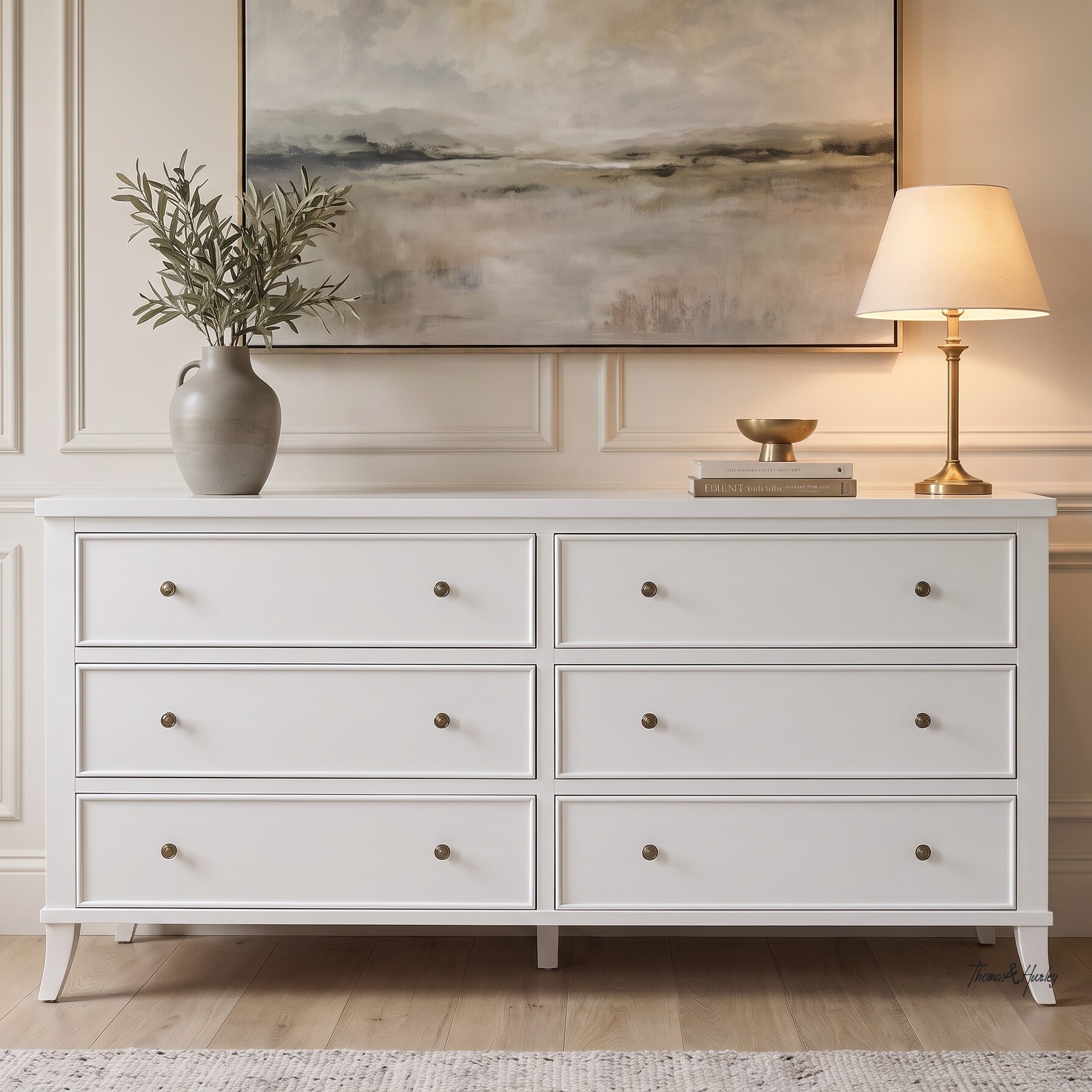
Or the same finish can be repeated for a more cohesive effect.
The important point is that the design language remains connected.
Proportions, detailing and hardware create a family resemblance even when the sizes and functions change.
This is a more relaxed way to approach bedroom furniture than simply buying an identical suite.
Brynmore: Storage That Can Anchor a Room
The Brynmore collection offers another progression of scale.
The Brynmore 3 Drawer Bedside Petite, Brynmore 3 Drawer Bedside, Brynmore 3 Drawer Chest and Brynmore 6 Drawer Chest allow the same understated aesthetic to move from bedside storage to much larger furniture.
The Brynmore 6 Drawer Chest in Black, for example, has enough width and visual presence to anchor a broad bedroom wall.
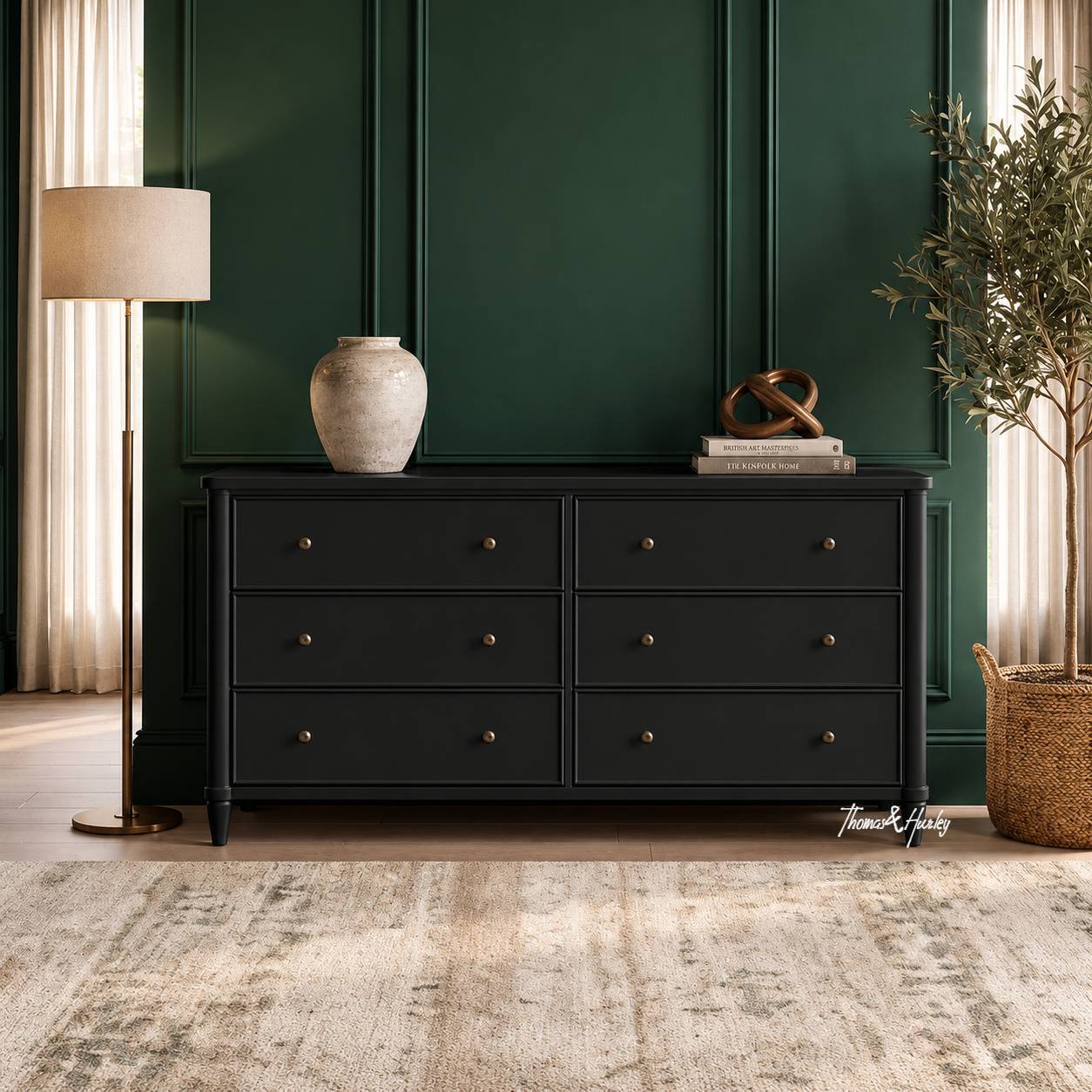
Positioned beneath artwork, it becomes part storage piece, part decorative focal point.
The white version creates an entirely different mood.
Against pale walls, the Brynmore 6 Drawer Chest in White can almost merge with the architecture, allowing artwork and accessories above it to carry more of the visual weight.
Again, black defines.
White softens.
Why Chests of Drawers Belong Beyond the Bedroom
One of the most useful shifts in contemporary interiors is the willingness to ignore overly rigid furniture categories.
A chest of drawers does not know it belongs in a bedroom.
Its function is simply storage.
That means pieces such as the Lando, Piastri and Brynmore chests can work surprisingly well elsewhere.
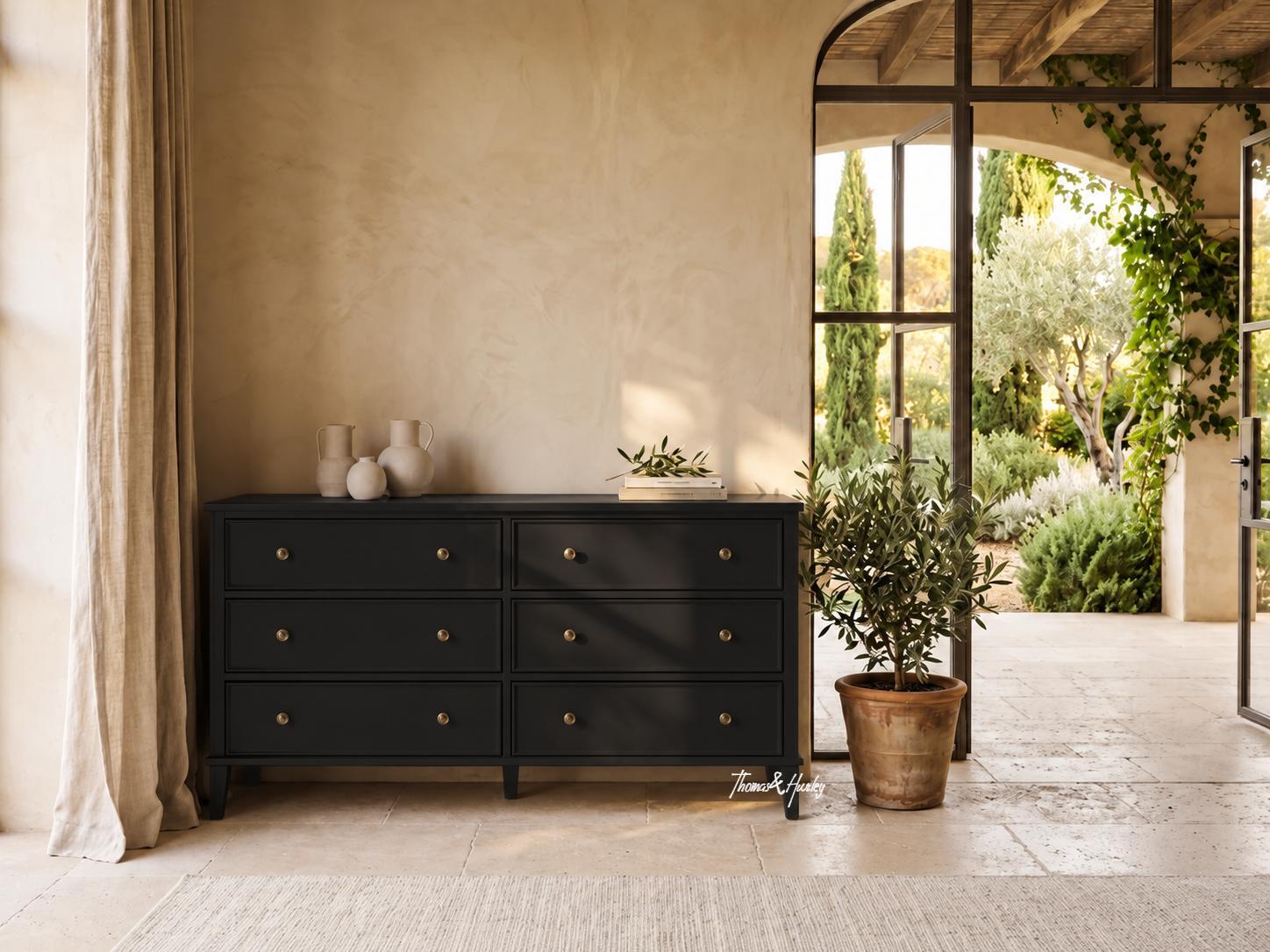
In an entryway, a three-drawer chest can provide storage for household necessities while supporting a lamp, artwork or mirror.
In a living room, drawers can conceal chargers, games, paperwork and smaller objects that would otherwise create visual clutter.
In a dining area, a wider six-drawer chest can store table linen, candles or entertaining accessories.
In a home office, drawers can organise documents and stationery.
The furniture remains the same.
Only the context changes.
The Bedside as an Occasional Table
The same thinking applies to smaller pieces.
A beautifully proportioned bedside table can easily become a side table beside an armchair.
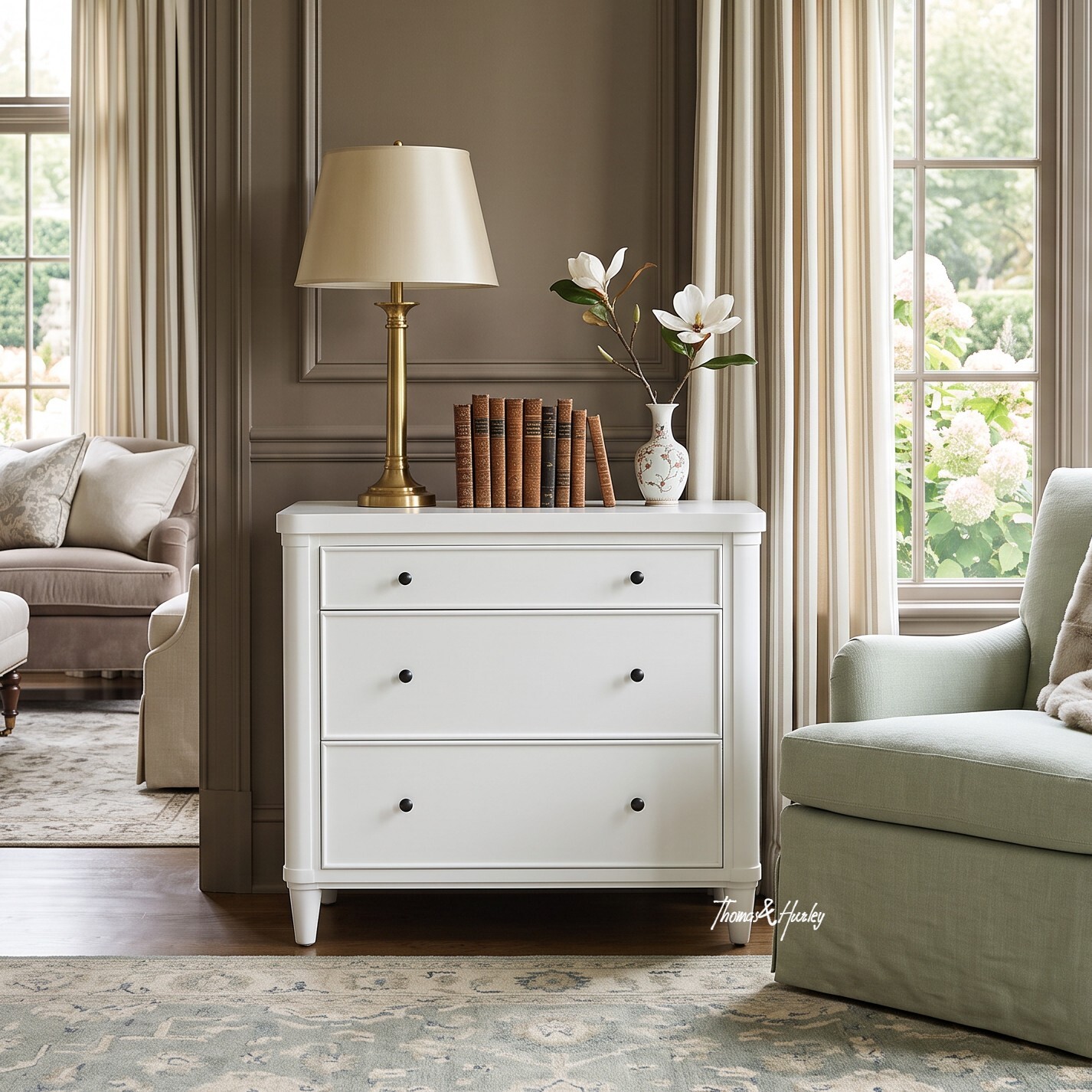
The Lando 1 Drawer Bedside, Piastri 1 Drawer Bedside and other open-shelf designs are particularly adaptable because they visually resemble occasional tables as much as bedroom furniture.
Place one beside a reading chair with a lamp and stack of books and the original bedroom association almost disappears.
A three-drawer bedside can work beside a sofa where additional concealed storage is useful.
This type of flexibility is valuable because homes change.
A piece purchased for one bedroom today may move into a guest room, living space or hallway years later.
Furniture with simple proportions and restrained finishes tends to adapt particularly well.
A Case for Concealed Storage
Minimal interiors are often associated with owning less.
In practice, they usually depend upon storing things better.
A calm bedroom still contains chargers, reading material, personal items, clothing and everyday necessities.
The difference is that much of it is not visible.
This is where drawers become valuable.
The three-drawer bedside is particularly effective because it combines a relatively compact footprint with enough storage to substantially reduce clutter around the bed.
A clear bedside surface immediately makes the room feel calmer.
The lamp has room.
A book can sit beside it.
Perhaps there is space for flowers or a small bowl.
Nothing needs to compete.
Practical storage therefore becomes part of the aesthetic.
How to Style a Bedside Table
The most successful bedside styling is usually relatively simple.
Start with lighting.
A table lamp provides both function and height, creating a vertical element beside the bed.
Add something lower.
A book, small bowl or decorative box creates another layer.
Then consider something organic.
A branch, flowers or a small arrangement of greenery can soften the geometry of the furniture.
The aim is not to fill the surface.
It is to create a small composition with variation in height and texture.
With black bedside furniture, pale ceramics and linen shades create beautiful contrast.
With white furniture, warmer stone, timber or darker metal accessories can prevent the arrangement from becoming visually flat.
The Importance of Scale Beside the Bed
Bedside furniture should also be considered in relation to the bed itself.
A tall, substantial upholstered bedhead can make an extremely delicate bedside appear undersized.
Conversely, a petite bed may feel crowded beside an overly substantial chest.
The height of the mattress is another consideration.
Ideally, the surface of the bedside should feel naturally accessible when sitting or lying in bed.
This is why having several sizes within a furniture collection is useful.
A Brynmore Petite Bedside may suit one room.
A larger Brynmore 3 Drawer Bedside may suit another.
The design relationship can remain consistent even when the proportions change.
Matching Bedside Tables: Is Symmetry Necessary?
Not necessarily.
Matching bedsides remain popular because they create calm symmetry around the bed, particularly in traditional, Hamptons and contemporary-classic interiors.
But they are not the only solution.
A large bedroom might pair a three-drawer bedside on one side with a smaller open-shelf table on the other, provided there is some relationship between the two.
Lamps can create visual connection.
Shared colour can provide continuity.
Similar heights can keep the composition balanced.
For Thomas & Hurley's black and white ranges, there is also the possibility of creating contrast within the furniture itself.
Black on one side and white on the other would be a much stronger design statement, but in the right interior it could feel intentionally collected rather than mismatched.
The important element is balance rather than strict duplication.
Creating a Black-and-White Interior Without Making It Feel Cold
Black and white furniture can easily suggest a high-contrast palette, but the surrounding materials determine whether it feels stark or inviting.
Warm timber floors immediately soften both finishes.
Cream rather than brilliant-white walls create a gentler backdrop.
Linen curtains add movement.
Natural wool rugs and upholstered bedheads introduce softness.
Ceramic lamps, greenery and aged brass bring warmth.
The result is not graphic black and white in the strict sense.
It is a layered neutral interior with black and white used as anchors.
This approach suits the Thomas & Hurley collections particularly well.
Hamptons Furniture Beyond Traditional White
White furniture naturally has a strong relationship with Hamptons style interiors, but black pieces can be just as effective.
Traditional Hamptons design relies heavily on contrast: crisp architecture, dark accents, natural textures and generous light.
A black chest of drawers against warm white wall panelling can therefore feel entirely appropriate.
It creates some of the same definition as a dark-framed window or black lantern-style light fitting.
White furniture offers the softer interpretation.
The two finishes can even coexist within the same home.
This is particularly useful when you want continuity of form without making every room identical.
Bedroom Furniture That Can Evolve With the Home
Perhaps the strongest argument for versatile bedside tables and chests is longevity.
Bedrooms change.
Children grow.
Guest rooms become offices.
Homes are renovated.
Furniture moves.
A piece that only works in one very specific setting has limited options when that setting changes.
Simple, well-proportioned storage furniture is different.
The Fremont, Lando, Piastri and Brynmore collections can move between rooms precisely because their functions are universal.
Drawers remain useful anywhere.
A flat surface remains useful anywhere.
A compact cabinet remains useful anywhere.
The styling around the furniture determines how we read it.
Choosing the Right Piece
For a smaller guest bedroom, a one-drawer bedside or petite bedside may provide everything required.
For a primary bedroom where concealed storage is important, a three-drawer bedside offers substantially more capacity without taking up the footprint of a full chest.
For a narrow wall, a three-drawer chest can add storage vertically.
For a broad wall, a six-drawer chest creates a stronger horizontal anchor and provides considerably more storage.
Then there is colour.
Choose white when the furniture should blend quietly with light architecture.
Choose black when the room needs definition or contrast.
Neither choice needs to be permanent in its styling implications.
The beauty of neutral furniture is its ability to change character as the room around it evolves.
Small Furniture, Significant Impact
The bedside may be one of the smallest pieces in the bedroom, but small does not mean insignificant.
It influences the balance around the bed.
It affects how easily everyday objects can be stored.
It provides a place for light.
It can introduce contrast, softness or architectural structure.
And, when chosen carefully, it can continue to be useful long after the room around it changes.
The Fremont, Lando, Piastri and Brynmore collections, available across a range of bedside and chest configurations in black and white, demonstrate how versatile bedroom storage can become.
A bedside can be more than somewhere to put a lamp.
A chest can belong somewhere other than the bedroom.
Black furniture can bring depth to a light interior.
White furniture can create calm and continuity.
And the same piece can play several different roles throughout the life of a home.
Perhaps that is what good furniture should do.
Not simply fill a particular space, but remain useful as the way we live within that space changes.
Like to know more?
Viewings are available at our Sydney studio/showroom.